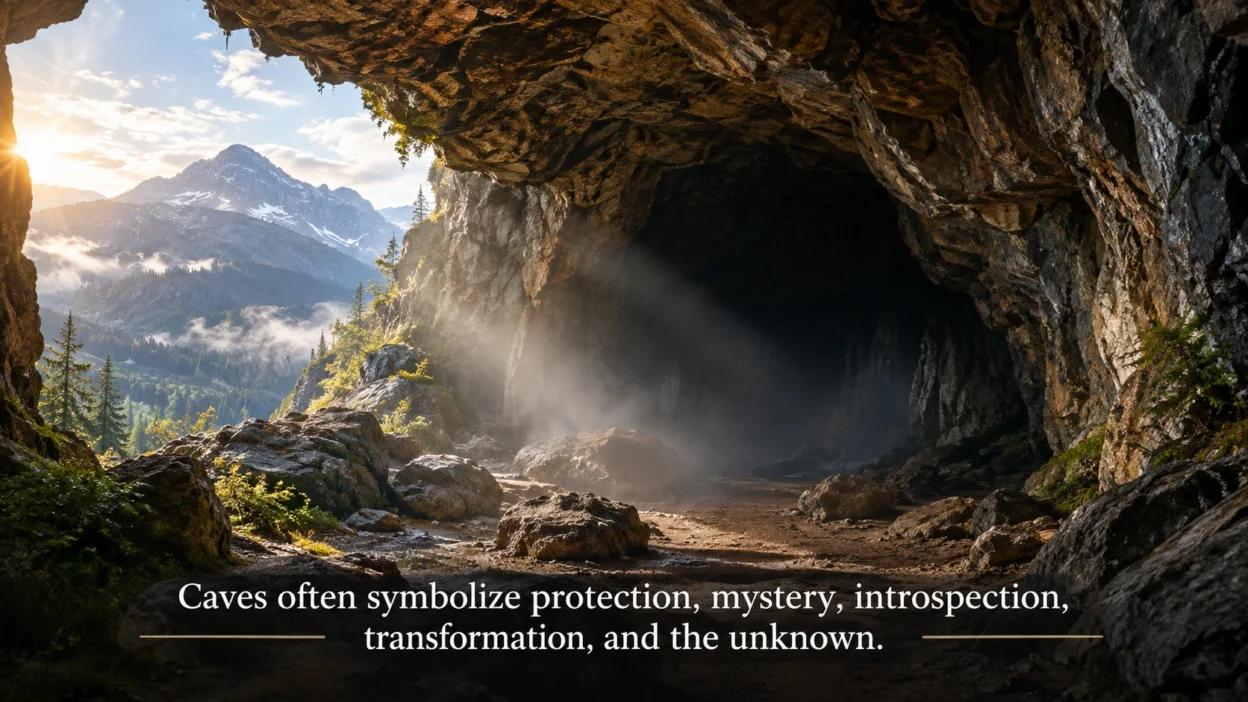
Cave symbolism connects a simple natural space with deep ideas about protection, mystery, transformation, and the unknown. Caves have sheltered people for thousands of years. They also appear in myths, spiritual traditions, art, literature, movies, and modern designs.
In the 2026, caves can suggest adventure and wilderness. They may also represent hidden parts of the self. A dark cave can feel frightening, while a sheltered cave can feel safe and peaceful.
However, caves carry more than one meaning. Their darkness may represent uncertainty, while their enclosed shape can suggest privacy and protection. Their deep interiors can also symbolize an inward journey.
Quick Answer
Cave symbolism in the USA commonly represents protection, mystery, introspection, transformation, and the unknown. More broadly, caves can symbolize birth, spiritual retreat, hidden knowledge, death, rebirth, and a journey into the unseen.
TL;DR
- Caves often represent safety, mystery, darkness, and hidden knowledge.
- Ancient people used caves for shelter, rituals, art, and burial practices.
- American culture often connects caves with wilderness, adventure, and exploration.
- A cave can symbolize turning inward and examining your deeper thoughts.
- Modern tattoos and artwork use caves to express mystery and transformation.
- Cave meanings change depending on culture, context, and personal experience.
What Does a Cave Symbolize?
Caves naturally create a powerful contrast between the outside world and the hidden interior. Their entrances can feel like thresholds between two different spaces.
A Symbol of Protection
A cave provides physical shelter from weather and danger. Because of this, people often connect it with safety and refuge.
The symbolism can extend into emotional life. Someone may see a cave as a private place where they can rest, recover, or feel protected.
A Symbol of Mystery
Darkness makes it difficult to see what lies inside. Therefore, caves naturally suggest secrets, uncertainty, and things that remain undiscovered.
For example, a cave in a painting may represent an unanswered question. Its darkness can invite curiosity rather than simply fear.
A Symbol of Transformation
Entering a cave can represent leaving familiar surroundings. Coming back out may suggest change, growth, or a new understanding.
This makes the cave a useful symbol for major life transitions. It can represent the difficult period between an old identity and a new one.
Ancient Roots of Cave Symbolism
Cave symbolism has very old roots because humans encountered caves long before written history. Their natural darkness and unusual shapes made them important spaces for survival and cultural expression.
Prehistoric Cave Life
Early humans used caves and rock shelters for protection and habitation. Some caves also preserve remarkable examples of prehistoric art.
Paintings and engravings found in caves show that these spaces could hold cultural meaning. The exact purpose of every ancient image remains uncertain, so modern interpretations should avoid treating every cave painting as a known ritual.
Caves as Sacred Spaces
Across history, caves sometimes became places for ceremonies, offerings, meditation, or encounters with the supernatural.
Their separation from ordinary daily life helped create a sense of sacred space. A person entering a deep cave was physically moving away from familiar surroundings.
Caves and the Underworld
Some ancient traditions connected underground spaces with death, ancestors, or the underworld. These ideas developed differently across cultures.
Still, the pattern is understandable. The cave leads beneath the surface, making it an easy image for hidden realms and mysterious forces.
Cave Symbolism in Ancient Mythology
Myths often use caves as places where important events happen. Heroes may enter them to face danger, find knowledge, meet supernatural beings, or begin a new stage of life.
Birth and Rebirth
Because caves are enclosed and womb-like, they can symbolize birth and renewal. A person entering darkness may metaphorically return to a protected beginning.
Later emergence can then represent rebirth. This pattern appears in different forms across myths and religious stories.
Hidden Knowledge
Caves can also hold something valuable that remains hidden from ordinary people. The hidden object might be treasure, wisdom, a sacred object, or a secret.
This gives caves a strong connection with discovery. Finding what lies inside can represent learning something previously unknown.
The Cave as a Threshold
A cave entrance functions like a doorway. However, it leads into a natural space rather than a human-made room.
That makes it a powerful threshold symbol. It can represent a choice between staying with the familiar and exploring something uncertain.
Cave Symbolism in the USA
American culture often gives caves a strong connection with nature, exploration, and adventure. The country’s large wilderness areas contain many famous cave systems and underground formations.
Wilderness and Exploration
For many Americans, caves are connected with hiking, camping, national parks, geology, and outdoor adventure. Exploring a cave can feel like discovering a hidden part of the landscape.
However, caves also remind people that nature isn’t always open and predictable. They contain narrow passages, darkness, underground water, and unusual rock formations.
American Stories and Media
Movies, novels, games, and television often use caves as settings for mystery and discovery. A character entering a cave may be searching for treasure, escaping danger, or confronting something unknown.
As a result, modern audiences may immediately associate caves with adventure. Fantasy and science-fiction stories have strengthened these connections.
Caves and American History
Caves have also played practical roles in American history. Indigenous peoples, settlers, miners, soldiers, and explorers interacted with caves and rock shelters in different ways.
Those histories aren’t interchangeable. Each site has its own cultural and environmental context, so the meaning of a particular cave depends on its history.
Spiritual Meaning of Caves
Caves can have spiritual meanings because they naturally encourage quietness and separation. Their darkness can create a strong sense of inward attention.
Retreat and Solitude
A cave can represent withdrawing from noise and distraction. In this sense, it becomes a symbol of solitude rather than loneliness.
People may use cave imagery to express a desire for reflection. The symbol can suggest taking time away before making an important decision.
Inner Journey
Going deeper into a cave can represent going deeper into yourself. It may symbolize confronting fears, memories, questions, or hidden emotions.
This interpretation appears frequently in modern spiritual and psychological writing. However, it isn’t a single universal religious teaching.
Sacred Darkness
Darkness isn’t always associated with something negative. In some symbolic settings, darkness can mean stillness, mystery, gestation, or the unknown.
Therefore, a dark cave can represent a quiet stage before something new becomes visible.
Cave Symbolism Across Cultures
Caves appear in many cultural traditions, but their meanings aren’t identical. Similar natural features can inspire different beliefs depending on local history.
Examples of Cultural Meanings
| Context | Meaning | Common Associations | Notes |
| Prehistoric caves | Shelter and cultural expression | Survival, art, community | Meanings vary by archaeological site |
| Ancient mythology | Hidden or supernatural realm | Mystery, underworld, transformation | Traditions developed differently |
| Spiritual retreat | Solitude and reflection | Prayer, meditation, wisdom | Depends on religious tradition |
| American wilderness | Exploration and discovery | Adventure, nature, geology | Strong connection with outdoor culture |
| Modern art | Inner experience | Mystery, fear, change | Usually shaped by personal interpretation |
A Shared Natural Pattern
Despite cultural differences, certain meanings recur. Darkness, enclosure, depth, and hidden spaces naturally encourage ideas about mystery and protection.
However, recurring symbolism doesn’t prove that every culture understood caves in exactly the same way. Context remains essential.
Emotional Meaning of Caves
Caves can produce very different emotional reactions. For one person, a cave may feel peaceful and protective. For another, it may feel frightening or claustrophobic.
Safety and Comfort
The enclosed structure of a cave can suggest privacy. This makes cave imagery useful when expressing emotional retreat or the need for personal space.
A cozy cave illustration may therefore communicate comfort. The same cave shown with harsh shadows can create a completely different feeling.
Fear and Uncertainty
Darkness naturally limits what you can see. Because of this, caves can represent uncertainty or fear of the unknown.
In stories, entering a cave often signals that a character doesn’t know what comes next. The darkness becomes part of the emotional tension.
Strength Through Difficulty
A cave can also symbolize endurance. Someone who survives a difficult period may describe the experience as moving through darkness before reaching the light.
This gives cave symbolism a hopeful side. The difficult interior becomes part of a larger journey rather than the final destination.
Psychological Meaning of Caves
Cave imagery often works well as a metaphor for the hidden parts of human experience. It can represent thoughts and feelings that aren’t immediately visible.
The Inner Self
A cave can symbolize the private self beneath a person’s public identity. Its interior suggests thoughts that others don’t easily see.
For example, an artwork showing a person sitting inside a cave may suggest reflection. The image doesn’t necessarily mean sadness or isolation.
Facing the Unknown
Entering a cave can represent confronting something unfamiliar. This might be a difficult decision, personal change, or unanswered question.
The important idea is movement. The person doesn’t simply stand outside the darkness. They choose to explore it.
Solitude Versus Isolation
These concepts can look similar but carry different meanings. Solitude can be chosen and restorative, while isolation can feel unwanted.
Cave symbolism can express either experience. The surrounding imagery determines whether the cave feels peaceful, lonely, threatening, or protective.
Cave Symbolism in Tattoos
Cave tattoos often appeal to people who want a symbol with several layers of meaning. A simple cave entrance can represent mystery without requiring a large design.
Common Tattoo Ideas
• A cave entrance can represent exploring the unknown.
• A glowing cave can suggest hope after difficult experiences.
• Mountains surrounding a cave can symbolize strength and refuge.
• A person inside a cave can represent introspection.
• Light emerging from darkness can suggest renewal and transformation.
The style changes the message. A realistic cave may emphasize nature, while a minimalist outline can feel more personal and abstract.
Caves in Art, Decor, and Social Media
Cave imagery has become useful in modern visual culture because it creates immediate atmosphere. It can make an image feel mysterious, peaceful, dramatic, or adventurous.
Home Decor
Cave-inspired interiors may use stone, earth tones, curved forms, and soft lighting. These elements can create a feeling of shelter and connection with nature.
However, modern cave decor usually borrows the visual mood rather than an ancient symbolic meaning. The design may simply communicate comfort and natural beauty.
Photography and Digital Art
Photographers often use cave entrances to frame landscapes. The dark foreground contrasts with bright scenery outside.
This creates a natural visual metaphor. Darkness can represent the familiar inner world, while the bright landscape suggests possibility beyond it.
Social Media Aesthetics
Cave imagery can also appear in posts about solitude, adventure, travel, personal growth, and nature. A cave photograph may communicate a mood without explaining it directly.
Because online symbols move quickly between communities, their meanings can become highly personal. The same image may suggest peaceful retreat to one viewer and fear to another.
Cave Symbolism in Literature and Movies
Writers have long used caves as settings for important encounters. The cave often marks a point where ordinary rules change.
The Cave as a Challenge
A character may enter a cave because they need something hidden inside. The journey can test courage, patience, or judgment.
Therefore, the cave becomes more than a location. It becomes a physical representation of the character’s challenge.
The Cave and the Unknown
Mystery stories often use darkness to delay information. Readers can’t see what the character sees, creating suspense.
Fantasy stories may go further by turning caves into gateways. They can lead to hidden kingdoms, ancient ruins, creatures, or magical worlds.
The Cave as a Metaphor
One famous philosophical example is Plato’s Allegory of the Cave. Written in ancient Greece, it uses people confined inside a cave to explore knowledge, perception, and the difference between appearances and reality.
Modern writers continue to adapt the basic idea. However, contemporary cave imagery can carry meanings beyond Plato’s original philosophical argument.
Cave Symbolism and the Natural World
Caves remind people that landscapes contain hidden spaces. A mountain may appear solid from outside while containing an enormous underground world.
Nature’s Hidden Side
This makes caves symbols of depth and discovery. They suggest that the visible world doesn’t always reveal everything beneath the surface.
For American audiences, this idea fits naturally with the country’s outdoor culture. National parks, forests, deserts, and mountain regions all contain landscapes that reward exploration.
Geological Time
Caves also suggest slow change. Water can gradually shape rock over extremely long periods.
As a result, caves can symbolize patience and endurance. Their formations remind viewers that major changes don’t always happen quickly.
Misunderstandings and Misuse of Cave Symbolism
Cave imagery doesn’t have one universal meaning. Treating every cave as a symbol of darkness, death, or danger can oversimplify its history.
Darkness Doesn’t Always Mean Evil
Darkness may represent fear in one context and peace in another. It can also suggest mystery, privacy, rest, or the beginning of transformation.
Therefore, the surrounding symbols matter. Light, people, animals, water, and the cave’s setting can change the interpretation.
Avoiding Cultural Overgeneralization
Ancient and Indigenous relationships with caves are often complex. A modern image shouldn’t automatically assign one spiritual meaning to every sacred or historically important cave.
Respectful interpretation recognizes local traditions and the specific history of a site. Symbolism should not replace documented cultural knowledge.
Commercialized Mystery
Modern entertainment sometimes turns caves into simple symbols of monsters, treasure, or danger. These associations can be entertaining, but they represent only part of the broader symbolism.
Real caves can also represent shelter, scientific discovery, geological history, and quiet reflection.
How Cave Meanings Have Changed Over Time
Cave symbolism has shifted as human relationships with nature changed. A cave could once be primarily a shelter, while today it may be a recreational destination or artistic metaphor.
From Shelter to Symbol
Early humans had practical reasons to enter caves. Later cultures added myths, rituals, stories, and spiritual associations.
Modern people often encounter caves through tourism, photography, movies, books, and outdoor recreation. Their symbolic meaning now includes adventure and personal discovery.
From Fear to Exploration
Unknown underground spaces once carried obvious physical dangers. Today, technology and organized cave tourism allow many people to experience caves more safely.
Consequently, caves can symbolize curiosity as much as fear. Modern explorers may view darkness as an invitation to discover something new.
Personal Meanings Today
Today, someone may choose cave imagery to represent privacy, resilience, transformation, or a love of nature.
There isn’t one required interpretation. Personal experience often determines which part of the symbol feels most meaningful.
Read More: Jungle Symbolism: Meaning, History, and Modern Uses
Why Cave Symbolism Still Matters Today
Caves remain powerful because they express ideas that are easy to understand visually. Everyone can recognize the contrast between a bright outside world and a dark hidden interior.
A Symbol of Looking Deeper
A cave can remind you that important things aren’t always visible immediately. Sometimes understanding requires patience and exploration.
A Symbol of Change
The cave can represent a difficult period without making that period the whole story. The journey inward can eventually lead back toward the light.
A Symbol of Mystery
Finally, caves preserve a sense of wonder. Even with modern science, underground spaces can still feel remote, ancient, and unknown.
FAQs
What does a cave symbolize spiritually?
A cave can symbolize solitude, reflection, hidden knowledge, transformation, and spiritual retreat. Its meaning depends on the specific religious or cultural tradition.
What does a cave represent in dreams?
A cave in a dream may be interpreted as a symbol of privacy, fear, exploration, or hidden thoughts. Dream meanings aren’t universal, so personal circumstances matter.
Why are caves associated with mystery?
Caves are dark, enclosed, and often difficult to explore. Their hidden interiors naturally create associations with secrets, uncertainty, and discovery.
What does a cave symbolize in literature?
In literature, caves can represent danger, hidden knowledge, transformation, isolation, or a journey into the unknown. Plato’s Allegory of the Cave is one famous philosophical example.
What does a cave tattoo mean?
A cave tattoo can represent introspection, mystery, protection, personal transformation, or overcoming difficult experiences. The meaning often changes with the tattoo’s surrounding imagery.
Are caves symbols of death?
Caves can sometimes symbolize death or the underworld in mythology. However, they can equally represent birth, shelter, renewal, wisdom, and transformation.
Conclusion
Cave symbolism brings together protection, mystery, introspection, transformation, and the unknown. Its history reaches from prehistoric shelter and ancient stories to American wilderness, literature, art, and modern tattoos. Today, a cave can mean many things at once. It might represent a safe place, a difficult journey, a hidden truth, or a quiet moment of self-reflection. Perhaps that flexibility explains why caves remain such powerful symbols. They remind us that darkness isn’t always an ending; sometimes, it marks the beginning of deeper exploration.