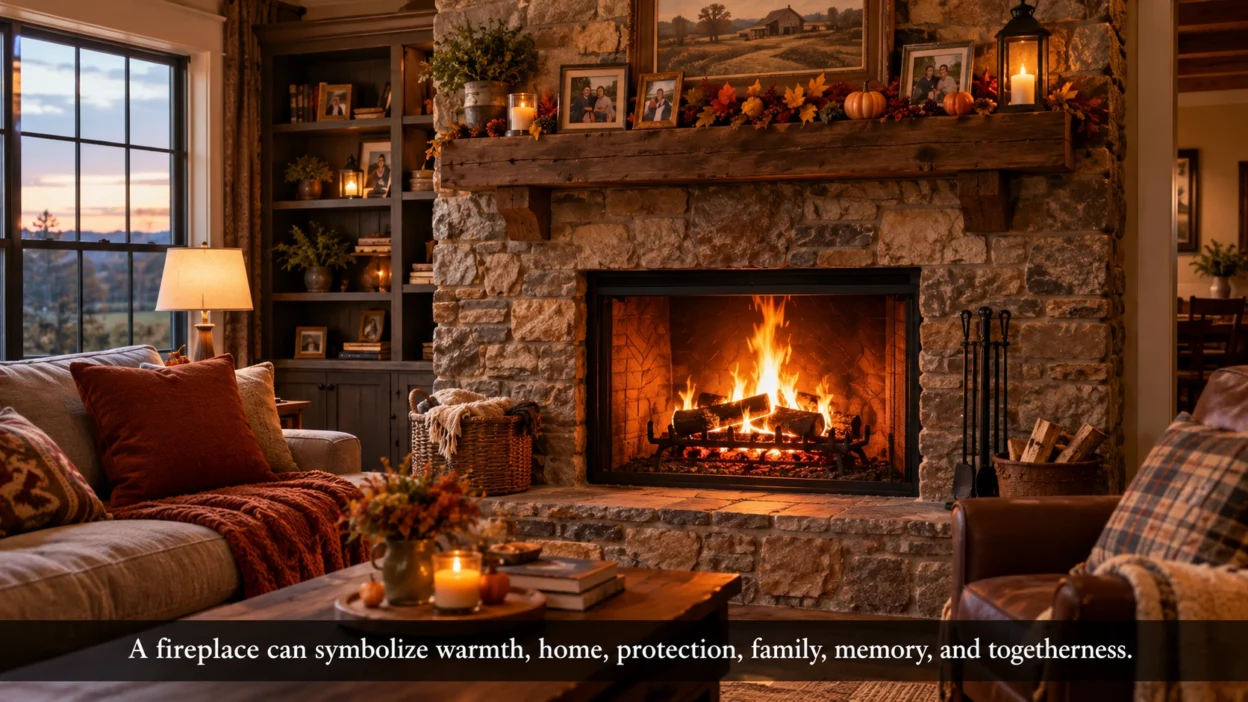
A Fireplace Symbolism often connects fire with warmth, home, protection, family, and emotional comfort. In the United States, fireplaces appear in houses, cabins, restaurants, holiday scenes, and family traditions. Because of this, they can feel familiar even when they aren’t used for heating.
However, a fireplace can mean more than physical warmth. The flames may represent life, energy, renewal, or transformation. Meanwhile, the hearth can suggest belonging, stability, memory, and a safe place to return.
Across history, people gathered around controlled fire for cooking, warmth, storytelling, and protection. Today, that old experience still shapes how Americans understand fireplaces in homes, movies, holidays, and personal spaces.
Quick Answer
Fireplace Symbolism in the USA commonly represents home, warmth, family, safety, comfort, and togetherness. More broadly, fire can symbolize transformation, life, passion, purification, and renewal.
TL;DR
- Fireplaces commonly symbolize warmth, safety, family, and home.
- Ancient hearths connected fire with survival and community.
- American culture strongly links fireplaces with family gatherings.
- Holiday imagery often turns fireplaces into symbols of tradition.
- Modern fireplaces can represent comfort, luxury, nostalgia, or identity.
What Does a Fireplace Symbolize?
A fireplace combines two powerful ideas: fire and home. Fire provides warmth and light, while the surrounding hearth creates a defined gathering place.
For Americans, this combination often creates an emotional picture of domestic life. A fireplace may suggest a quiet evening, family conversation, winter holidays, or returning home after a difficult day.
Warmth and Comfort
The most obvious meaning is physical warmth. However, people often extend that warmth into emotional life.
A glowing fireplace can make a room feel peaceful and welcoming. Therefore, it commonly represents comfort during stressful or uncertain periods.
Home and Belonging
The hearth has long been associated with the center of domestic life. Today, the fireplace can still represent a place where people feel connected.
For example, a family room with a fireplace may become the setting for conversations, celebrations, and shared memories.
Protection and Security
Historically, controlled fire offered protection from cold, darkness, and some dangers. Consequently, the fireplace can symbolize a sheltered space.
Its walls contain something powerful and potentially dangerous. This balance makes the fireplace a useful symbol of controlled strength and security.
Historical Meaning of the Fireplace
The history of the fireplace begins with humanity’s relationship with controlled fire. Long before modern houses existed, people depended on fire for survival.
However, the fireplace itself developed gradually. Early hearths were open areas where people maintained fire for cooking, heating, and light.
Ancient Hearths
Ancient households often treated the hearth as an important center of domestic life. Fire could support cooking, warmth, craftsmanship, and social gatherings.
In several ancient traditions, household fire also developed religious meanings. The Roman goddess Vesta, for example, was associated with the hearth and domestic life.
Greek tradition similarly connected Hestia with the hearth. These traditions show how practical fire could become connected with ideas of home, family, continuity, and sacred order.
From Hearth to Fireplace
Over time, architectural designs changed how people contained fire. Hearths became more structured, and chimneys eventually helped carry smoke outside.
During medieval and early modern periods, large fireplaces became important features of homes, castles, inns, and communal buildings.
The fireplace therefore shifted from a simple survival tool into an architectural and social centerpiece.
Fireplace Symbolism in American Culture
In the United States, fireplaces became strongly connected with ideas of domestic comfort. This association developed through architecture, literature, advertising, holiday traditions, and popular entertainment.
The American fireplace can represent both a real household feature and an imagined ideal of home life.
The American Home
Many American homes, especially older houses and rural cabins, have fireplaces or fireplace-inspired designs. Even homes without functional fireplaces may include decorative mantels.
This makes the fireplace a symbol of domestic stability. It can communicate the feeling of having a place that is warm, private, and secure.
Family Gatherings
Fireplaces often appear in scenes involving family gatherings. People sit nearby during winter evenings, celebrations, storytelling, or relaxed conversations.
As a result, the fireplace can represent togetherness without requiring constant activity. Sometimes its symbolism comes simply from people sharing the same space.
American Holidays
Christmas has especially strengthened fireplace imagery in American culture. Stockings, decorations, gifts, candles, and evergreen branches often appear around the mantel.
At the same time, fireplaces also appear in Thanksgiving and winter imagery. They can therefore symbolize seasonal traditions, hospitality, and family memories.
Spiritual Meaning of a Fireplace
Fire has spiritual meanings in many traditions, although interpretations differ widely. A fireplace adds another layer because it places fire inside a home.
For some people, the image can suggest an inner light or a protected source of energy. These interpretations are personal and shouldn’t be treated as universal religious beliefs.
Fire as Transformation
Fire changes what it touches. Wood becomes ash, darkness becomes light, and cold surroundings become warm.
Because of this, fire has often become a symbol of transformation. A fireplace can represent a controlled version of that change.
Fire as Continuity
A fire that remains burning can also suggest continuity. One generation may maintain traditions that another generation inherited.
This makes the hearth a useful metaphor for family customs, cultural memory, and traditions passed through time.
Different Cultural Interpretations
Across cultures, hearths and fires have been associated with household life, hospitality, protection, ceremony, and community.
However, these meanings aren’t identical. A fireplace in a modern American home should not automatically be given the same meaning as a sacred fire in another tradition.
What Does a Fireplace Mean Psychologically?
The fireplace often creates strong emotional associations because humans naturally respond to warmth, light, and enclosed spaces.
However, personal experiences matter. Someone who grew up around a fireplace may connect it with family, while another person may simply see it as attractive home decor.
Safety and Relaxation
A controlled fire can create a sense of calm. Its movement provides visual interest without demanding attention.
Therefore, fireplace imagery often appears in settings designed for relaxation. Hotels, cabins, restaurants, and homes may use it to create a welcoming mood.
Nostalgia and Memory
Fireplaces can remind people of earlier periods in their lives. A particular smell, sound, or winter scene may bring back memories.
Because of this, the fireplace can symbolize nostalgia. It can represent not only a physical home but also the feeling of remembering one.
Emotional Reconnection
The fireplace can also suggest slowing down. Unlike a screen or notification, a fire doesn’t require constant interaction.
For modern audiences, that contrast can make the fireplace symbolize presence, quietness, and human connection.
Fireplace Colors and Visual Meanings
The meaning of a fireplace can change depending on its materials, colors, and surroundings.
A traditional brick fireplace creates a different impression from a modern glass fireplace. Likewise, a roaring fire feels different from cold ashes.
| Fireplace Context | Common American Association | Symbolic Meaning |
| Stone fireplace | Nature, cabins, permanence | Stability and endurance |
| Brick fireplace | Traditional homes, history | Familiarity and belonging |
| Modern glass fireplace | Design, luxury, simplicity | Sophistication and controlled energy |
| Bright flames | Warmth and activity | Life, passion, and vitality |
| Dying embers | Quiet evenings, endings | Memory, reflection, and transition |
| Empty fireplace | Abandoned or unused space | Absence, silence, or change |
Stone and Brick
Stone often gives a fireplace an earthy appearance. Therefore, it can suggest strength, permanence, and connection with nature.
Brick has a different feeling. In American homes, it often evokes tradition, craftsmanship, and familiar domestic spaces.
Flames and Embers
Bright flames can represent energy and life. Their movement may also suggest passion, creativity, or change.
In contrast, glowing embers can suggest calmness and memory. They show that something remains even after the strongest flames disappear.
Fireplace Symbolism in Literature and Media
American literature and entertainment have helped turn fireplaces into emotional symbols. A fireplace can establish a setting before characters even speak.
For example, a family sitting near a fire immediately communicates intimacy and shelter. A lonely person sitting beside an empty fireplace creates an entirely different mood.
The Cozy Fireplace
Modern media often uses fireplaces to represent comfort. Winter romances, family dramas, holiday movies, and advertisements frequently use warm firelight.
The visual contrast is important. Cold weather outside makes the warm interior feel safer.
The Empty Hearth
However, filmmakers can reverse the symbolism. An unused fireplace may suggest loneliness, loss, or a home that no longer feels complete.
This shows that symbolism depends heavily on context. The same object can communicate comfort or absence.
Fireplace Symbolism in Home Decor
Today, fireplaces remain popular even when heating isn’t their main purpose. Electric and decorative fireplaces allow people to recreate the visual effect without traditional wood burning.
As a result, the fireplace has become partly a design symbol.
Luxury and Status
Large fireplaces can communicate spaciousness and comfort. In some modern homes, they function as architectural focal points.
However, the meaning isn’t limited to wealth. A small fireplace in a simple cabin can communicate warmth and authenticity just as strongly.
Rustic and Modern Styles
Rustic fireplaces often emphasize natural materials and tradition. Modern fireplaces may emphasize clean lines, glass, stone, and minimal design.
Both styles can represent comfort. They simply express it through different visual languages.
Fireplace Symbolism in Tattoos and Personal Expression
Fireplace tattoos are less common than flame tattoos, but the image can carry highly personal meanings.
Someone may choose a hearth to represent family, childhood, ancestry, or a place that feels like home.
Common Personal Associations
A fireplace tattoo might represent:
- Family traditions that continue across generations
- A childhood home filled with meaningful memories
- Finding comfort after a difficult period
- Building a safe and welcoming life
- Keeping personal passions alive
- Returning emotionally to a cherished place
The surrounding imagery can change the message. Flowers may add growth, while ashes may suggest endings or remembrance.
Fireplace Symbolism on Social Media
On social media, fireplaces often appear in lifestyle photographs and seasonal posts. Their symbolism is usually connected with relaxation, coziness, and home life.
Winter photographs may show blankets, books, candles, mugs, and fireplaces together. This creates a visual language centered on comfort and slowing down.
The Idea of Coziness
The modern concept of a cozy fireplace often represents an idealized peaceful life. It can suggest taking a break from work and spending time indoors.
However, social media images are usually curated. They represent an aesthetic rather than the complete reality of someone’s life.
Fireplace Symbolism in Holidays and Traditions
The fireplace has a particularly strong place in American Christmas imagery. Stockings hanging from mantels are familiar symbols of anticipation and family celebration.
However, the fireplace itself isn’t exclusively a Christmas symbol. It also appears throughout autumn and winter as a general image of seasonal comfort.
Christmas and Stockings
The mantel creates a visible place for stockings and decorations. Over time, this helped connect fireplaces with gift-giving and childhood memories.
Consequently, the fireplace can symbolize anticipation as much as warmth.
Winter Traditions
During cold months, the fireplace may represent gathering indoors. Families may cook, talk, read, play games, or simply relax nearby.
This makes the fireplace a symbol of shared time rather than merely physical heating.
Misunderstandings and Changing Meanings
Fireplaces usually carry positive associations, but their meaning isn’t always positive. Fire itself can represent destruction, danger, anger, or uncontrolled change.
Therefore, context matters when interpreting fireplace imagery.
Fire Versus Hearth
A fireplace contains fire, but it isn’t identical to the idea of fire. A wild blaze may symbolize destruction, while a maintained hearth usually suggests controlled energy.
This distinction helps explain why fireplaces often feel safer symbolically than flames alone.
Not Every Fireplace Has a Spiritual Meaning
Another common misunderstanding is assuming every fireplace represents a spiritual or sacred idea.
Sometimes a fireplace is simply a fireplace. Symbolic meaning depends on cultural context and the person’s intention.
How Fireplace Symbolism Has Changed
The fireplace has changed dramatically as technology has changed. Central heating reduced its practical importance, but its emotional meaning remained strong.
Today, fireplaces can be functional, decorative, digital, or entirely symbolic.
From Survival to Comfort
Historically, maintaining a fire could be essential for survival. In many modern American homes, heating no longer depends on the fireplace.
Therefore, its meaning shifted toward relaxation, atmosphere, tradition, and design.
Read More: Cave Symbolism: Meaning, History, and Modern Uses
From Necessity to Nostalgia
A fireplace once solved a practical problem. Today, it can remind people of that older domestic experience.
That shift explains why fireplaces remain powerful symbols even when people rarely use them.
FAQs
What does a fireplace symbolize?
A fireplace commonly symbolizes home, warmth, family, safety, comfort, and togetherness. Depending on context, it can also represent transformation, passion, memory, and continuity.
What does a fireplace symbolize spiritually?
Spiritually, a fireplace may suggest inner light, transformation, protection, or continuity. However, specific meanings vary between traditions and individuals.
Why does a fireplace symbolize home?
The fireplace developed from the household hearth, where people gathered for warmth, cooking, and daily life. That long connection helped make it a visual symbol of domestic belonging.
What does a fireplace symbolize in dreams?
A fireplace in a dream can have different personal meanings. A warm fire might suggest comfort or connection, while an extinguished fire might evoke loss, distance, or change.
Why are fireplaces associated with Christmas?
American Christmas imagery often places stockings and decorations around the fireplace mantel. Over time, this helped make the fireplace a familiar symbol of holiday warmth and anticipation.
What does an empty fireplace symbolize?
An empty fireplace can suggest quietness, absence, nostalgia, or transition. Its meaning depends strongly on the surrounding setting and the person’s emotional response.
Conclusion
A fireplace brings together the symbolism of fire and home. In American culture, it commonly represents warmth, family, protection, comfort, tradition, and belonging. However, its meaning can reach beyond physical shelter. Flames can suggest transformation and energy, while embers can evoke memory and continuity. Today, Fireplace Symbolism remains powerful because the image connects modern homes with an ancient human experience: gathering around a shared source of warmth. Whether you see a fireplace in a home, photograph, movie, holiday scene, or personal design, consider the feeling surrounding it. Sometimes its strongest message is simply the timeless idea of having somewhere warm to come home to.