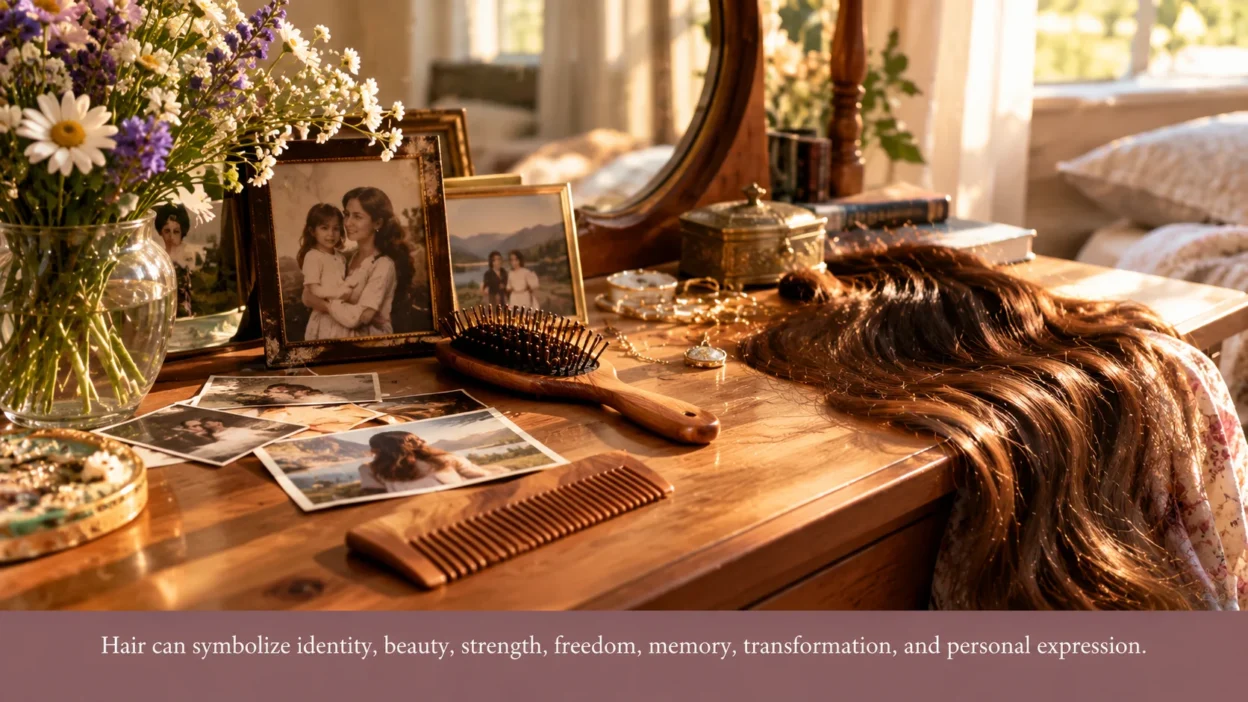
Hair symbolism explores the meanings people attach to hair, from appearance and identity to strength, beauty, freedom, and belonging. Hair is part of the body, but people often treat it as a powerful form of personal expression.
In 2026, hair can communicate personality before someone says a word. A haircut, hairstyle, color, or decision to grow hair can reflect fashion, culture, age, confidence, or a major life change.
Across history, hair has also carried religious, social, and emotional meanings. Sometimes it represented status or devotion. At other times, cutting or covering it marked grief, discipline, adulthood, or transformation.
Quick Answer
Hair Symbolism in the USA commonly represents identity, beauty, strength, freedom, individuality, and personal transformation. More broadly, hair can symbolize spiritual devotion, social status, vitality, maturity, or a connection to cultural heritage.
TL;DR
- Hair often represents identity, individuality, beauty, and personal expression.
- Long hair has frequently been linked with vitality and strength.
- Cutting hair can symbolize change, loss, discipline, or a fresh beginning.
- American culture connects hairstyles strongly with fashion and identity.
- Religious traditions may give hair meanings of devotion or humility.
- Today, hair remains a visible symbol of personal choice.
What Does Hair Symbolize?
Hair is one of the most visible parts of human appearance. Because of this, people often use it to communicate something about themselves.
Core Meanings of Hair
Different people can attach different meanings to the same hairstyle. However, several themes appear repeatedly.
• Identity: Hair can express who someone feels they are.
• Beauty: Hair has long influenced ideas about attractiveness and grooming.
• Strength: Thick or long hair can suggest vitality and power.
• Freedom: Natural or unconventional styles can express independence.
• Transformation: Changing hair can mark a new stage of life.
• Heritage: Hairstyles can preserve family or cultural traditions.
The meaning also depends on context. A shaved head may represent freedom for one person and grief or discipline for another.
Historical Meaning of Hair
Hair symbolism reaches far into human history. Ancient societies often connected hair with social position, beauty, age, gender, strength, and spiritual life.
Ancient Roots
In ancient Egypt, hair and elaborate hairstyles could communicate status and appearance. Wigs were also used for practical and social reasons, showing that hair did not always have to be natural to carry meaning.
Ancient Greek and Roman societies likewise placed importance on hairstyles. Hair could distinguish age, social position, fashion, or participation in ceremonies.
Religious and Mythological Traditions
Hair also appears in many myths and religious stories. One well-known example is Samson in the Hebrew Bible, whose extraordinary strength is connected with his uncut hair.
In other traditions, cutting hair could symbolize sacrifice, humility, mourning, or devotion. These meanings developed differently across communities and should not be treated as universal rules.
Hair Symbolism in America
In the United States, hair has become closely connected with individuality and personal choice. Hairstyles can change quickly with fashion, entertainment, music, sports, and social movements.
Hair and American Identity
American culture often treats appearance as part of self-expression. A person may change their hair after graduating, starting a job, ending a relationship, or simply wanting something different.
At the same time, hairstyles can carry deeper cultural meanings. Black American hair, for example, has a significant history connected with identity, beauty standards, discrimination, community, and cultural pride.
Hair in Everyday American Life
Hair appears in many ordinary settings:
• School and workplace grooming can influence hairstyle choices.
• Fashion trends frequently introduce new cuts and colors.
• Family traditions can pass hairstyles between generations.
• Weddings often feature carefully styled hair and accessories.
• Hair changes can accompany birthdays, graduations, or new careers.
Because hair is highly visible, changes can become meaningful even when they begin as simple fashion choices.
Spiritual Meaning of Hair
Hair has spiritual meaning in several religious and cultural traditions. However, there isn’t one universal spiritual interpretation.
Devotion and Discipline
Some traditions connect hair with devotion, humility, discipline, or religious identity. In these settings, growing, covering, cutting, or maintaining hair can become part of a person’s religious practice.
For example, certain Christian monastic traditions historically involved shaving part of the head as an outward sign of religious commitment.
Hair as Sacred or Personal
Other traditions treat hair as something closely connected with the body and personal identity. Sikh traditions are especially notable for maintaining uncut hair, known as kesh, as part of religious observance.
These examples show why hair should be understood within its cultural setting rather than assigned one fixed spiritual meaning.
What Does Long Hair Symbolize?
Long hair commonly suggests vitality, beauty, freedom, patience, or individuality. Yet its meaning changes greatly depending on the person and culture.
Strength and Vitality
Long hair can visually suggest growth because it develops gradually over time. This makes it an easy metaphor for endurance, patience, and natural development.
Myths and stories have sometimes strengthened this association. Samson’s hair, for instance, is famously connected with extraordinary strength.
Freedom and Individuality
In modern American culture, long hair can also represent independence. This became especially noticeable through youth culture and counterculture during the twentieth century.
However, long hair isn’t automatically rebellious. Today, it can simply reflect personal taste, fashion, heritage, or comfort.
What Does Cutting Hair Symbolize?
Cutting hair can represent change because it creates an immediate and visible difference. People often use haircuts to mark personal transitions.
New Beginnings
A haircut can symbolize starting over. Someone might cut their hair after graduation, a major life transition, or a period of personal growth.
The symbolism can feel powerful because the change is visible in the mirror. The person can literally see a different version of themselves.
Loss and Mourning
Historically, hair cutting has sometimes been associated with mourning or separation. In other contexts, cutting hair represented discipline, punishment, sacrifice, or religious commitment.
Today, the same action may simply mean wanting a new style. Context determines the deeper meaning.
Hair and Identity
Hair can become an important part of personal and cultural identity. It can communicate belonging while still allowing individual creativity.
Cultural Heritage
Traditional hairstyles can connect people with family history and cultural heritage. They may preserve techniques, patterns, or grooming practices passed between generations.
In America, this can be especially meaningful for communities whose hairstyles have been misunderstood or unfairly judged.
Gender and Self-Expression
Hair has also been used to express gender presentation and personal style. Short, long, curly, straight, natural, colored, or shaved hair can all communicate different impressions.
However, appearance doesn’t reliably reveal someone’s identity. A hairstyle is an expression, not a complete definition of a person.
Hair Symbolism in Dreams
Dream interpretations often connect hair with identity, confidence, control, aging, or change. However, dream symbolism isn’t a universal science.
Common Dream Themes
People sometimes interpret hair-related dreams through personal associations.
• Losing hair may reflect fears about change or vulnerability.
• Cutting hair may represent a desire for personal transformation.
• Growing hair may suggest patience, development, or renewed confidence.
• Changing hair color may symbolize experimentation or reinvention.
• Tangled hair can represent confusion within a personal situation.
These interpretations work best as reflective ideas rather than fixed predictions. The dreamer’s own experiences usually matter more than a universal symbol list.
Hair, Beauty, and Psychological Meaning
Hair can influence how people feel about their appearance. A hairstyle may become part of someone’s daily confidence and sense of self.
Control and Confidence
Changing hair can create a feeling of control during uncertain periods. A person may not be able to change everything around them, but they can choose a haircut or style.
However, cultural beauty standards can also affect how people judge themselves. Hair symbolism therefore includes both empowerment and social pressure.
Transformation and Self-Image
A dramatic hairstyle can act like a visual reset. It may help someone separate an earlier period of life from a new chapter.
This is one reason hair changes often appear during major transitions. The outer change can reinforce an inner feeling of change.
Hair Symbolism in Tattoos and Art
Hair appears in tattoos and visual art because it can communicate personality without words. Artists can exaggerate length, movement, texture, or color to create symbolic effects.
Common Artistic Themes
Flowing hair can suggest movement, freedom, or natural energy. Braided hair may suggest connection, heritage, patience, or continuity.
Artists may also use hair to frame the face or emphasize a character’s personality. In portraits, hair can become as expressive as clothing or facial expression.
Hair in Fashion and Social Media
Modern hair culture is strongly influenced by visual media. Instagram, TikTok, YouTube, magazines, television, and celebrity culture can spread hairstyles quickly.
Digital Self-Expression
Hair transformations work especially well online because they are immediately visible. Before-and-after images can communicate a personal story in seconds.
Color changes, dramatic cuts, curls, braids, and natural styles can all become part of someone’s digital identity. Yet online trends can also make beauty standards feel more demanding.
Hair in Weddings, Holidays, and Rituals
Hair becomes especially symbolic during important life events. Weddings are one clear example, as people often choose hairstyles that reflect tradition, elegance, family customs, or personal taste.
Ritual and Celebration
Hair may also be styled differently for graduations, religious ceremonies, festivals, birthdays, and other celebrations.
| Context | Meaning in the USA | Common Association | Notes |
| Wedding | Beauty and preparation | Love and celebration | Often reflects personal and family traditions |
| Graduation | Transition | Achievement and adulthood | A new style may mark a fresh chapter |
| Haircut | Change | Renewal and confidence | Meaning depends on personal circumstances |
| Natural hairstyle | Identity | Authenticity and pride | Can connect with cultural heritage |
| Dyed hair | Individuality | Creativity and experimentation | Color can carry personal meanings |
Hair Symbolism Across Cultures
Hair carries meanings across many cultures, but those meanings are not identical. Some traditions emphasize modesty, while others emphasize beauty, power, devotion, or community.
Different Cultural Associations
In some cultures, long hair has been associated with femininity or vitality. Elsewhere, shaved or closely cropped hair has represented religious devotion, discipline, military identity, or a major transition.
Braiding can also carry practical and cultural importance. It may represent family knowledge, heritage, community, or simply a useful method of managing hair.
Why Context Matters
The same hairstyle can mean completely different things in different communities. Therefore, it is better to ask what a particular tradition means to its practitioners.
This approach avoids turning a living cultural practice into a simple decorative symbol.
Misunderstandings and Controversies
Hair symbolism can become complicated when cultural hairstyles are judged through narrow beauty standards. In the United States, debates around workplace and school hair policies have highlighted these concerns.
Cultural Appropriation
Some hairstyles have deep cultural or religious histories. When people outside those communities adopt them, reactions can vary depending on context, intent, power relationships, and whether the original meaning is being respected.
There is no single response to every situation. Learning the history and treating cultural practices respectfully can help avoid careless use.
Hair and Discrimination
Hair has also been connected with discrimination and unequal beauty standards. Certain natural textures and culturally significant hairstyles have sometimes been treated as less professional or acceptable.
These attitudes have changed in many places, but debates about hair and appearance continue. Modern discussions increasingly recognize that hair texture and cultural styling should not automatically determine someone’s character or professionalism.
How Hair Symbolism Has Changed Over Time
Hair meanings have never stayed fixed. Ancient societies, religious traditions, fashion movements, and modern media have all shaped how people understand it.
Read More: Piercing Symbolism: Meaning, History, and Modern Identity
From Status to Self-Expression
Earlier societies often used hairstyles to communicate social position or group membership. Today, American culture places much more emphasis on personal choice.
However, older meanings haven’t disappeared. Religious communities, cultural traditions, families, and ceremonial practices continue to preserve them.
A More Personal Symbol
Today, hair often works as a flexible personal symbol. The same person can use it to express beauty, rebellion, heritage, professionalism, creativity, or simply comfort.
That flexibility is one reason hair remains culturally powerful. It changes with the person wearing it.
FAQs
What does hair symbolize spiritually?
Hair can symbolize devotion, humility, discipline, vitality, or spiritual identity in different traditions. Its meaning depends on the specific religious or cultural context.
What does long hair symbolize?
Long hair can represent beauty, strength, freedom, patience, vitality, or individuality. In modern America, it can also simply reflect personal style.
What does cutting hair symbolize?
Cutting hair may represent change, renewal, separation, discipline, mourning, or a new beginning. Many people also cut their hair for ordinary practical or fashion reasons.
What does hair symbolize in dreams?
Hair in dreams is sometimes associated with identity, confidence, change, aging, or vulnerability. However, dream meanings are personal and shouldn’t be treated as universal predictions.
Why is hair important to identity?
Hair is highly visible and easy to change, making it a powerful form of self-expression. It can also connect people with culture, family history, gender presentation, and personal memories.
Can hair symbolize freedom?
Yes, hair can symbolize freedom when someone uses it to reject expectations or express individuality. However, long or unconventional hair doesn’t automatically represent rebellion.
Conclusion
Hair symbolism connects appearance with identity, beauty, strength, freedom, heritage, and transformation. In American culture, hair often becomes a visible way to communicate individuality while still carrying older cultural and spiritual meanings. The meaning of Hair Symbolism depends on the person, hairstyle, culture, and situation. A simple haircut can represent renewal, while long or carefully maintained hair can express patience, pride, tradition, or self-expression. Ultimately, hair can tell a personal story without saying a word. Whether you grow it, cut it, color it, braid it, or leave it natural, its meaning often comes from the story you attach to it.