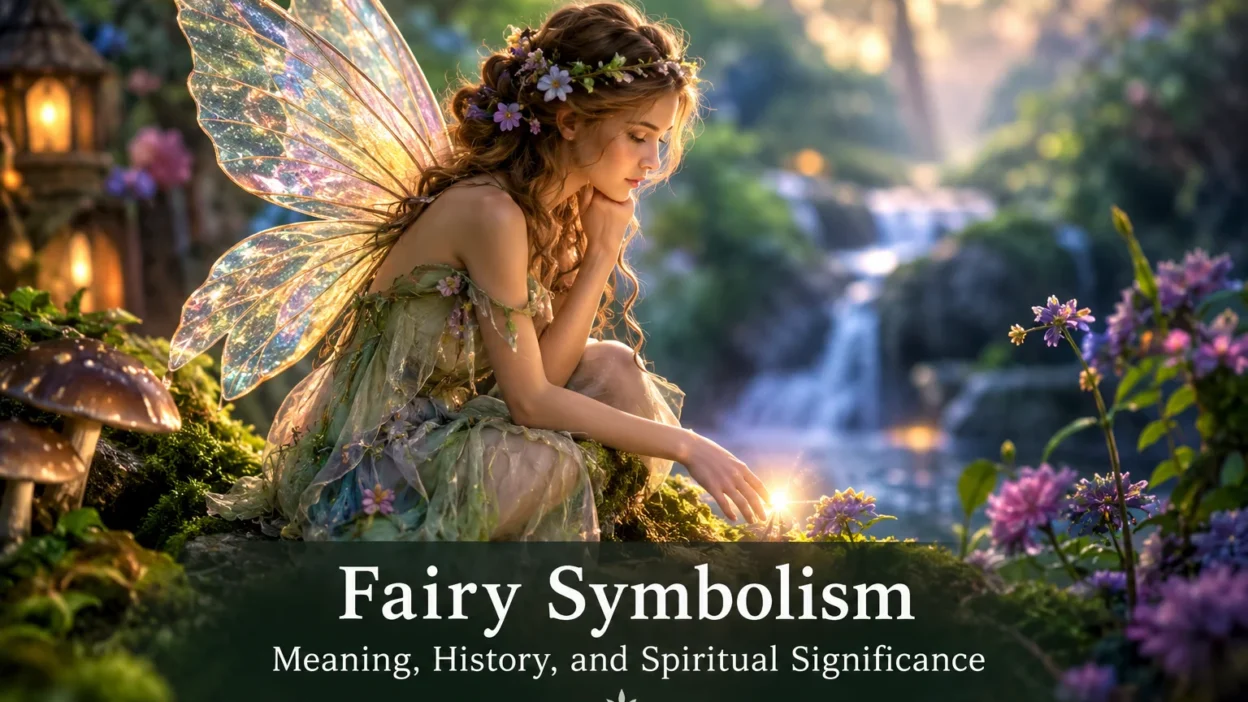
Fairy symbolism explores the meanings behind magical beings associated with nature, imagination, transformation, and the unseen world. In stories, fairies often appear as tiny winged figures, glowing spirits, or mysterious beings living near forests, flowers, and streams. However, their traditional forms and meanings are much more varied than popular images suggest.
However, fairies haven’t always been portrayed as sweet, harmless creatures. Older European folklore describes beings that could offer blessings, mislead travelers, steal people away, or punish those who ignored traditional rules. These stories reveal a more complicated relationship between humans and the natural world.
Today, fairy imagery brings together ancient folklore and modern creativity. Understanding its history helps explain why a small winged figure can represent kindness, independence, danger, mystery, or personal transformation.
Quick Answer
Fairy symbolism in the United States commonly represents magic, imagination, nature, innocence, and personal transformation. More broadly, fairies can symbolize the mysterious forces of nature, spiritual possibilities, hidden dangers, and the delicate boundary between the ordinary and extraordinary.
TL;DR
- Fairies commonly symbolize magic, wonder, imagination, and hidden possibilities.
- Their historical roots include European folklore, local spirits, and supernatural traditions.
- American culture often connects fairies with childhood, fantasy, gardens, and creativity.
- Different fairy appearances can suggest protection, freedom, beauty, mischief, or mystery.
- Modern fairy tattoos and decorations often express individuality and a love of nature.
- Traditional stories also portray fairies as unpredictable beings who demand respect.
What Does Fairy Symbolism Mean?
Fairies are supernatural beings found in folklore, mythology, literature, and popular imagination. Their appearances vary widely, from delicate winged figures to powerful, humanlike beings who live in hidden worlds. Consequently, their symbolism depends on their appearance, behavior, and cultural setting.
In modern American imagery, fairies usually suggest positive qualities. However, older stories often present them as powerful beings whose intentions are difficult to understand.
Common Symbols Associated With Fairies
- Magic: The ability to imagine possibilities beyond ordinary experience.
- Nature: A close relationship with flowers, forests, animals, and natural cycles.
- Transformation: Personal growth, unexpected change, and discovering hidden strengths.
- Innocence: Childhood wonder, curiosity, and openness to new experiences.
- Mystery: The unknown, unseen influences, and unanswered questions.
- Freedom: Individual expression, unconventional identity, and independence from social expectations.
What Makes a Fairy Symbol Recognizable?
A traditional modern fairy often has a small humanlike body, delicate wings, flowing clothing, and a graceful pose. Artists may surround the figure with flowers, stars, mushrooms, butterflies, or glowing particles.
However, wings aren’t essential to every fairy tradition. Some folkloric fairies look almost human, while others appear as strange lights, shadowy figures, or beings that change their shape.
These differences matter because visual details can change the message. A fairy surrounded by flowers might suggest peaceful natural beauty, while a dark figure in a misty forest may communicate danger or secrecy.
The Historical Origins of Fairy Symbolism
Fairy symbolism developed over many centuries through European oral traditions, religious beliefs, and imaginative storytelling. There isn’t one single origin for fairies, because different communities described different supernatural beings.
Ancient and Pre-Christian Roots
Ancient Greek and Roman traditions included nymphs associated with springs, forests, mountains, and other natural places. These beings weren’t identical to fairies, but they share themes of nature, beauty, and supernatural power.
In pre-Christian European traditions, people sometimes understood unusual places and natural events through stories about unseen beings. Later fairy beliefs blended different local customs, older stories, and Christian interpretations.
Irish and Scottish folklore became especially important to later ideas about fairies. Some stories connected supernatural beings with ancient mounds, hills, and hidden places in the landscape.
Medieval Europe and the Fairy World
During the Middle Ages, fairies became common figures in European stories and romances. They could appear as beautiful women, mysterious strangers, powerful enchantresses, or members of hidden supernatural communities.
Fairies also became associated with fate, love, wealth, and unexpected change. However, receiving a fairy’s gift could bring trouble when a person broke a promise or ignored a warning.
These older stories explain why fairy symbolism includes both wonder and caution. A fairy wasn’t necessarily a friendly guide; it could represent a world governed by unfamiliar rules.
From Folklore to Fairy Tales
By the seventeenth and eighteenth centuries, published fairy tales helped spread supernatural characters to wider audiences. Writers adapted older stories, reshaped their characters, and introduced new lessons about courage, kindness, greed, and responsibility.
In the nineteenth century, romantic art and literature increasingly portrayed fairies as delicate, beautiful, and closely connected to nature. Illustrations helped establish the tiny winged fairy that many Americans recognize today.
Fairy Symbolism in American Culture
In the United States, fairies are strongly associated with childhood imagination, fantasy entertainment, gardens, and creative self-expression. American culture inherited many European fairy traditions and reshaped them through books, illustrations, theater, film, and commercial products.
However, fairy symbolism isn’t limited to children’s stories. Adults also use fairy imagery to express personal values, spiritual curiosity, and a desire to preserve wonder in everyday life.
Fairies in American Stories and Entertainment
Fairy tales have become a familiar part of American childhood through books, animated films, television, and theater. Characters who grant wishes, protect nature, or guide heroes often represent hope during difficult moments.
Consider the fairy godmother, a familiar figure in many modern adaptations of European tales. She symbolizes unexpected help, transformation, and the possibility that a difficult situation can change.
Other stories present fairies as independent, mischievous, or morally complicated. These characters remind audiences that magic doesn’t always guarantee a happy ending.
Fairies in Gardens and Everyday Life
Fairy gardens are popular decorative expressions of the belief that ordinary places can hold extraordinary possibilities. Miniature doors, tiny houses, mushrooms, and small figurines turn a garden into an imagined hidden world.
In American homes, fairy imagery may appear in nurseries, craft rooms, outdoor spaces, and personal collections. These decorations often communicate creativity, comfort, and a connection with nature.
Common American Interpretations
- Childhood wonder: keeping imagination alive beyond childhood.
- Natural beauty: celebrating flowers, forests, and small living things.
- Personal freedom: expressing an unconventional or imaginative identity.
- Hope: believing that unexpected positive changes remain possible.
- Creativity: exploring fantasy through art, writing, and design.
Spiritual Meaning of Fairies
Fairies have spiritual meanings in some contemporary belief systems, although these meanings aren’t universal. Some people view them as symbols of nature’s mystery, while others treat them as imaginative representations of spiritual connection.
It’s important to distinguish historical folklore from modern spiritual interpretations. A meaning that feels personally significant today may not reflect the beliefs of every community that tells fairy stories.
Connection With Nature
In some contemporary nature-centered spiritual practices, fairies represent the idea that nature has qualities beyond human understanding. Forests, streams, flowers, and old trees become reminders of the world’s complexity.
For someone who enjoys spending time outdoors, a fairy might symbolize respect for living things. The figure can encourage curiosity about nature without requiring a literal belief in supernatural beings.
Magic, Intuition, and the Unseen
Fairies may also represent intuition, mystery, and the parts of life that people cannot easily explain. Their hidden world provides a story-based way to explore uncertainty and personal discovery.
However, fairy symbolism shouldn’t be confused with a single established spiritual doctrine. Its meaning depends on the person’s beliefs, the tradition involved, and the context in which the image appears.
Fairy Symbolism and Spiritual Reflection
A fairy can serve as a personal reminder to:
- Notice beauty in ordinary surroundings.
- Stay curious when facing unfamiliar experiences.
- Protect natural spaces and living things.
- Make room for imagination alongside practical responsibilities.
- Explore personal beliefs without assuming everyone shares them.
Different Types of Fairies and Their Symbolism
Fairies appear in many forms, and each form can suggest different qualities. Modern artists often assign particular meanings to fairy colors, wings, clothing, and surroundings, although these associations aren’t fixed across all traditions.
For American readers, these visual differences are especially familiar from fantasy art, jewelry, tattoos, and garden decorations.
Fairy Types and Common Interpretations
| Fairy type | Common symbolic meaning | Visual associations |
| Flower fairy | Beauty, growth, tenderness | Blossoms, petals, green leaves |
| Woodland fairy | Nature, independence, mystery | Trees, moss, earthy colors |
| Water fairy | Emotion, change, renewal | Streams, blue tones, flowing shapes |
| Dark fairy | Mystery, rebellion, hidden fears | Shadows, dark wings, dramatic clothing |
| Fairy godmother | Guidance, generosity, hope | A wand, a glowing light, elegant clothing |
| Mischievous fairy | Playfulness, unpredictability, freedom | Unusual poses, bright colors, playful expressions |
Flower Fairies
Flower fairies commonly symbolize the beauty and fragility of nature. Their association with blossoms also connects them with spring, growth, renewal, and the changing seasons.
A flower fairy may appeal to someone who values gentleness or enjoys gardening. However, the meaning can shift depending on the flower, color, and surrounding imagery.
Woodland and Water Fairies
Woodland fairies often represent freedom, hidden knowledge, and the mystery of wild places. They may appear near mossy trees, mushrooms, ferns, or moonlit paths.
Water fairies are frequently associated with emotions, movement, and renewal in modern fantasy art. Their imagery can suggest the ability to adapt, release old feelings, or begin again.
Dark Fairies
Dark fairies explore the mysterious side of fairy folklore. Their appearance may communicate independence, secrecy, rebellion, or a willingness to face uncomfortable emotions.
Darkness doesn’t automatically make a fairy evil. In modern art, it can simply create a dramatic contrast with the familiar image of a sweet, delicate fairy.
The Psychological and Emotional Meaning of Fairies
Fairy symbolism can express emotions that are difficult to describe directly. Because fairies belong to an imagined world, they offer a flexible way to represent hope, vulnerability, curiosity, and personal change.
Their meaning often depends on the feelings a person associates with childhood stories, nature, or fantasy.
Wonder and Imagination
Fairies can represent the ability to see possibilities beyond immediate circumstances. For example, a person who keeps a fairy figurine on a desk might use it as a reminder to approach creative work with curiosity.
This doesn’t mean the person rejects reality. Instead, the symbol can encourage a balance between practical thinking and imaginative exploration.
Innocence and Emotional Comfort
Soft colors, delicate wings, and friendly expressions often create feelings of safety and tenderness. These images can remind people of comforting childhood memories or stories shared with loved ones.
However, innocence doesn’t have to mean weakness. A fairy can represent the choice to remain kind and openhearted while facing difficult experiences.
Independence and Personal Identity
Fairies also exist outside ordinary human rules in many stories. This makes them useful symbols for people who value individuality or feel different from those around them.
For some, a fairy represents the freedom to embrace unusual interests, artistic tastes, or personal beliefs. For others, it represents the courage to protect a sense of wonder in a demanding world.
Fairy Symbolism in Dreams
Dreams about fairies can feel magical, comforting, confusing, or unsettling. However, there isn’t one universal interpretation of a fairy dream, and a dream doesn’t automatically predict future events.
Personal experiences, recent stories, and emotions may influence the images that appear during sleep.
Seeing a Friendly Fairy
A friendly fairy may remind someone of hope, creativity, support, or a desire for greater joy. If the dream feels peaceful, the fairy might reflect a wish for comfort or a fresh perspective.
The setting matters, too. A fairy in a garden may evoke nature, while one appearing in a childhood home might bring up memories or familiar emotions.
Seeing a Dark or Frightening Fairy
A frightening fairy might reflect uncertainty, distrust, or discomfort with a situation that seems appealing but feels unpredictable. This is one possible personal interpretation, not a fixed psychological rule.
Instead of searching for a single correct answer, consider the dream’s emotional tone. Ask yourself what the fairy did and whether anything in your waking life evokes similar feelings.
Questions to Consider After a Fairy Dream
- Did the fairy make you feel safe, curious, anxious, or confused?
- Was the setting familiar or completely unknown?
- Did the fairy offer help, hide something, or create a problem?
- Have recent books, films, or conversations influenced your imagination?
These questions can help you explore personal associations without treating dreams as guaranteed messages.
Fairy Symbolism in Tattoos, Jewelry, and Home Decor
Fairy imagery remains popular because it can be delicate, dramatic, playful, or deeply personal. In the United States, people use fairy designs to express creativity, affection for nature, childhood memories, and individual identity.
The design often communicates as much as the fairy itself. Wings, flowers, moons, colors, and surrounding objects can add layers of meaning.
Fairy Tattoos
A fairy tattoo can symbolize freedom, transformation, imagination, or a connection with nature. However, its meaning usually comes from the wearer’s personal story rather than a universal rule.
Common design choices include:
- A fairy with butterfly wings to suggest change and freedom.
- A fairy beside flowers to express natural beauty and growth.
- A dark fairy to represent mystery or unconventional identity.
- A fairy beneath the moon to evoke dreams and imagination.
- A small fairy silhouette to preserve a simple, personal reminder.
Fairy Jewelry and Accessories
Fairy pendants, earrings, bracelets, and charms often emphasize delicacy and personal expression. Some people choose them because they enjoy fantasy, while others connect them with hope or a meaningful memory.
A winged charm may also symbolize freedom or the desire to explore new possibilities. These interpretations depend on the wearer rather than any universal symbolic code.
Fairy-Themed Home Decor
Fairy gardens, miniature houses, figurines, and wall art can transform ordinary spaces into playful environments. They may help create a peaceful atmosphere or encourage creative activities with children.
In adult spaces, fairy designs can also communicate a love of fantasy and handcrafted art. Their presence doesn’t necessarily indicate spiritual beliefs.
Fairy Colors, Wings, and Other Visual Symbols
Color and design can influence how people interpret fairy imagery. Although modern artists use recurring visual conventions, these meanings aren’t universal historical rules.
Common Fairy Colors
- Green: Nature, growth, renewal, and harmony with the environment.
- Pink: Tenderness, affection, sweetness, and gentle emotions.
- Blue: Calmness, imagination, water, and emotional depth.
- Purple: Mystery, fantasy, creativity, and spiritual curiosity.
- White: Light, purity, innocence, and a sense of enchantment.
- Black: Mystery, independence, dramatic beauty, or hidden fears.
These associations reflect common modern interpretations. A particular story or cultural tradition may assign different meanings to the same color.
What Fairy Wings Symbolize
Wings often suggest freedom, movement, and the ability to cross boundaries. They can also represent transformation because they connect the fairy with flying insects such as butterflies.
However, wings aren’t necessary for a character to qualify as a fairy in traditional folklore. Their widespread use in modern illustrations reflects artistic choices rather than a defining feature of every fairy tradition.
Magic Wands and Glowing Light
A wand often represents the ability to influence events or turn possibilities into action. In modern fairy imagery, glowing light may suggest hope, guidance, or the discovery of something hidden.
Together, these details create a visual language that helps viewers understand a fairy’s role. A bright wand may suggest assistance, while a shadowy glow can create suspense.
Misunderstandings and Controversies About Fairy Symbolism
Fairies are widely enjoyed as fictional characters and decorative symbols. However, their history includes darker stories and cultural traditions that deserve more care than a simple magical image might suggest.
Understanding these differences helps readers appreciate fairy symbolism without treating every tradition as interchangeable.
The Myth That All Fairies Are Tiny and Kind
Modern illustrations often show fairies as miniature, beautiful, winged creatures. Traditional European folklore, however, includes beings that look human, change their appearance, or act in dangerous and unpredictable ways.
Fairies could offer help, but they might also deceive people or demand respect. Their behavior depended on the particular story rather than a single rule.
Confusing Fairies With Other Spiritual Beings
Fairies are sometimes compared with angels, spirits, nature beings, or supernatural figures from other cultures. These comparisons can help people explore shared themes, but they shouldn’t erase important differences.
For example, ancient Greek nymphs and Irish fairies may both appear in stories about nature. Nevertheless, they belong to distinct cultural and historical traditions.
Cultural Appropriation and Oversimplification
Using fairy imagery for art or decoration isn’t automatically disrespectful. However, presenting a living cultural tradition as a generic magical aesthetic can remove its historical meaning.
This concern matters when artwork draws directly from a specific community’s sacred practices or traditional stories. Learning about the source and representing it accurately can help avoid misleading claims.
Fairies and Harmful Historical Beliefs
Some older fairy beliefs were used to explain illness, disability, unexplained events, or personal misfortune. In certain historical settings, these explanations contributed to harmful treatment of vulnerable people.
Today, such beliefs should be understood as part of folklore history, not as reliable explanations for medical conditions. Appreciating the stories doesn’t require accepting their harmful conclusions.
How Fairy Symbolism Has Changed Over Time
Fairy symbolism has shifted from local supernatural beliefs to popular stories and modern personal expression. These changes show how societies adapt old images to fit new interests and values.
From Powerful Beings to Gentle Magical Figures
In older European folklore, fairies could be frightening, demanding, or unpredictable. Their stories often emphasized caution, respect for boundaries, and the risks of entering an unfamiliar world.
Later literary and artistic traditions increasingly presented fairies as beautiful and enchanting. As children’s fairy tales spread, many fairies became helpful characters associated with happy endings and moral lessons.
From Fairy Tales to Modern Identity
In contemporary American culture, fairies often appear in fantasy entertainment, crafts, fashion, and social media. Their symbolism now extends beyond childhood into adult creativity, self-expression, and personal reflection.
Dark fairy artwork also shows that the older association with danger hasn’t disappeared. Instead, modern creators often combine beauty and mystery to explore more complicated emotions.
Read More: Mermaid Symbolism: Meaning, History, and Spiritual Power
What Has Stayed the Same?
Despite these changes, several themes remain familiar:
- Fairies connect ordinary places with imagined possibilities.
- They represent experiences that feel mysterious or difficult to explain.
- Their stories explore the relationship between humans and nature.
- They can bring unexpected change, whether welcome or dangerous.
- They challenge the idea that appearances always reveal the truth.
FAQs
What Does a Fairy Symbolize Spiritually?
A fairy may symbolize a connection with nature, intuition, wonder, or unseen possibilities. In contemporary spiritual settings, some people also associate fairies with natural harmony, although beliefs vary widely.
What Does Seeing a Fairy Symbolize?
In a story, artwork, or personal experience, a fairy may represent imagination, hope, mystery, or change. Its meaning depends on the context and the feelings it creates.
Are Fairies Symbols of Good Luck?
Fairies sometimes appear as helpful figures who bring gifts, blessings, or unexpected opportunities. However, traditional folklore also portrays them as unpredictable, so fairies aren’t universally considered symbols of good luck.
What Does a Fairy Tattoo Mean?
A fairy tattoo can express freedom, creativity, personal growth, or a love of nature. Some people choose fairy designs to celebrate childhood memories, while others prefer their mysterious or rebellious qualities.
What Do Fairy Wings Symbolize?
Fairy wings commonly represent freedom, transformation, imagination, and the ability to move beyond ordinary limitations. Their meaning can change with the design, especially when the wings resemble butterflies, moths, or other insects.
Are Fairies Connected to Ancient Mythology?
Fairies aren’t derived from one single ancient myth. Their traditions developed through different European beliefs and later storytelling, with some similarities to ancient nature beings such as Greek nymphs.
Conclusion
Fairy symbolism brings together magic, nature, imagination, transformation, and mystery. In the United States, fairies are especially familiar through children’s stories, fantasy entertainment, garden decorations, tattoos, and creative expression. However, their older folklore also reminds us that fairies can represent uncertainty, hidden power, and the importance of respecting unfamiliar worlds. Over time, these supernatural figures have changed from unpredictable beings in traditional stories into versatile symbols of wonder and individuality. Their meanings continue to evolve as artists, writers, and everyday people give them new interpretations. Whether you enjoy fairy gardens, fantasy art, or the history of folklore, a fairy can remind you to stay curious about the world. Sometimes, its most meaningful message is simply to leave room for wonder in ordinary life.