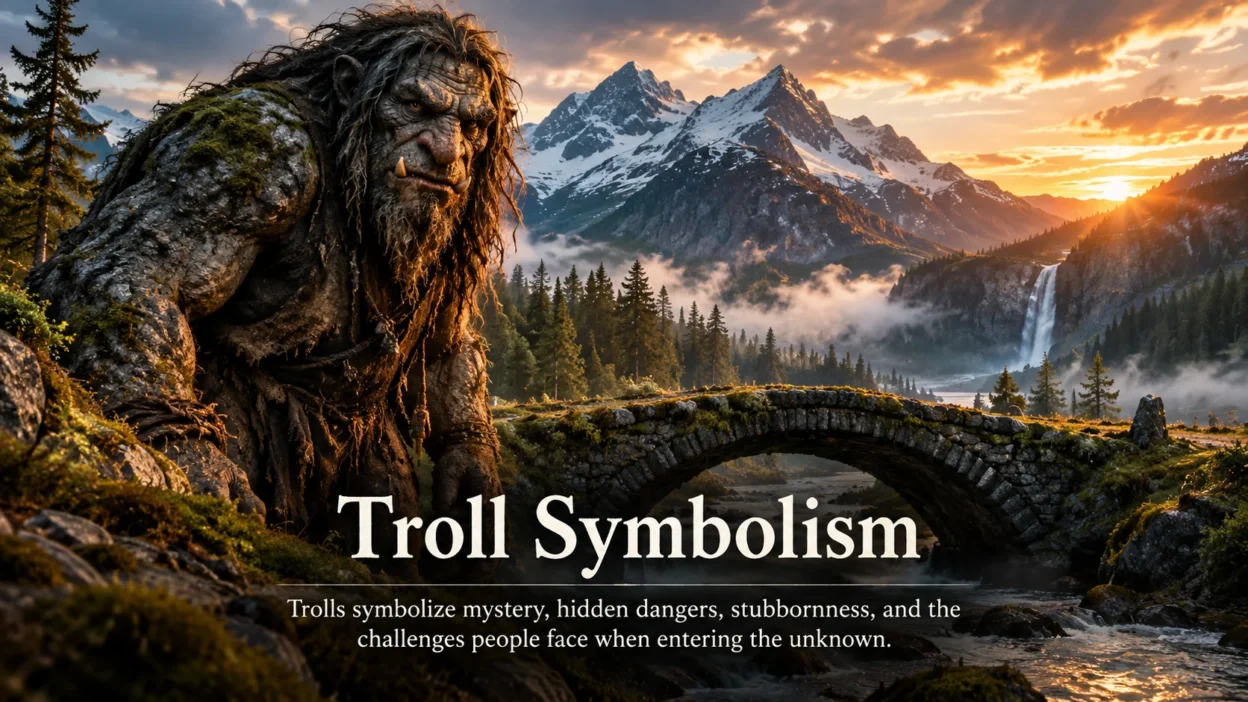
Troll symbolism explores the meanings behind mysterious beings associated with folklore, wilderness, hidden dangers, and supernatural power. Trolls appear in stories as strange creatures living beneath bridges, inside mountains, or deep within forests. Some are frightening giants, while others are small, humorous characters with unusual features. Their appearance and behavior often reflect the fears, beliefs, and imagination of the people who tell their stories.
In 2026, trolls are familiar figures in fantasy movies, children’s books, video games, and internet culture. They can represent mischief, stubbornness, isolation, or the challenges people face when entering unfamiliar territory. However, trolls aren’t always evil. Some modern stories portray them as misunderstood creatures with their own traditions, emotions, and wisdom.
Understanding troll symbolism helps explain why these mythical beings remain popular. They connect ancient legends with modern ideas about identity, belonging, danger, and personal transformation. Whether a troll appears in a fantasy adventure or an online argument, its meaning often depends on the setting and the character’s actions.
Quick Answer
Troll symbolism in the United States commonly represents mischief, hidden danger, stubbornness, and the mysterious forces of nature. In folklore, trolls often guard dangerous places or challenge travelers, while modern fantasy and internet culture use them to explore misunderstanding, disruption, and unconventional identity.
TL;DR
- Trolls symbolize mischief, mystery, danger, and resistance to authority.
- Norse and Scandinavian folklore helped shape traditional troll legends.
- American entertainment often portrays trolls as frightening monsters or lovable outsiders.
- Bridge trolls symbolize obstacles, tests, and difficult choices.
- Internet trolls represent provocation, conflict, and deliberate disruption.
- Modern troll imagery can express humor, individuality, and misunderstood identity.
What Does a Troll Look Like?
Trolls don’t have one fixed appearance. Their features vary across traditional legends, fantasy artwork, children’s entertainment, and modern games.
Common Physical Features
Traditional Scandinavian trolls often appear as enormous, rough-looking beings with exaggerated bodies and supernatural abilities. Some live in caves or mountains, while others resemble ordinary people until their unusual nature becomes apparent.
Artists frequently depict trolls with features such as:
- Large noses, heavy brows, pointed ears, or oversized teeth.
- Rough skin resembling stone, tree bark, or weathered earth.
- Thick hair, tangled beards, and bulky bodies.
- Dark clothing, animal skins, or simple natural materials.
- Unusual proportions that make them appear powerful or comical.
However, not every troll looks frightening. Some stories portray them as small, strange, or almost human.
Colors and Visual Associations
Color often influences how viewers interpret a troll. Green skin may suggest nature, fantasy, or a connection to forests, while gray and brown can evoke rocks, caves, and ancient landscapes.
Dark colors sometimes emphasize danger or secrecy. In contrast, bright colors and exaggerated expressions can make trolls seem playful, friendly, or suitable for children’s entertainment.
Historical Origins of Troll Symbolism
Troll symbolism has deep roots in Scandinavian folklore. These stories developed over centuries, reflecting people’s relationships with the natural world, supernatural beliefs, and unfamiliar places.
Trolls in Norse and Scandinavian Traditions
The word troll belongs to the historical traditions of northern Europe, particularly Scandinavia. Old Norse literature contains references to trolls and other supernatural beings, although their characteristics weren’t always consistent.
In medieval Scandinavian stories, trolls could appear as dangerous opponents, strange neighbors, or beings associated with wilderness. Their nature varied according to the story rather than following one universal description.
Trolls also belonged to a broader world of supernatural creatures. Giants, spirits, and other beings sometimes overlapped with troll-like figures in literature and oral storytelling.
Folklore and the Natural World
Before modern science explained many natural events, unfamiliar landscapes could inspire stories about supernatural inhabitants. Remote mountains, dark forests, deep caves, and isolated valleys provided natural settings for troll legends.
These environments could feel beautiful and threatening at the same time. Trolls gave storytellers a way to imagine the hidden powers that might inhabit such places.
Several traditional associations developed around these settings:
- Mountains represented strength, age, and hidden worlds.
- Forests suggested uncertainty, transformation, and unfamiliar territory.
- Caves represented concealment, mystery, and danger.
- Bridges became places where travelers might encounter a supernatural challenge.
These connections helped trolls become symbols of the unknown. They also gave traditional stories a memorable way to teach caution.
How Troll Stories Changed Over Time
As Scandinavian folklore passed between generations, trolls appeared in fairy tales, poems, illustrations, and children’s literature. Their personalities became increasingly varied.
Some remained frightening creatures associated with danger and destruction. Others became humorous characters whose foolishness or greed caused their own downfall.
Later fantasy literature, films, and games expanded these possibilities. Today, a troll might be a powerful enemy, a comic companion, a misunderstood outsider, or an intelligent inhabitant of an imaginary world.
Troll Symbolism in the United States
In the United States, trolls carry several meanings because American culture combines European folklore with modern entertainment and internet language. Their symbolism often changes depending on whether they appear in a fairy tale, a fantasy game, or an online conversation.
Trolls in American Entertainment
American audiences encounter trolls through animated films, fantasy adventures, toys, books, and video games. These portrayals often simplify traditional folklore to make trolls recognizable to modern audiences.
Some productions present trolls as friendly creatures who value music, friendship, or community. Others portray them as dangerous opponents who protect territory or challenge heroes.
As a result, trolls can symbolize either a threat to overcome or an outsider worth understanding. Their role often reveals more about the story’s message than their appearance alone.
Trolls as Outsiders
Trolls frequently live away from human settlements. This separation can make them symbols of people who feel different, misunderstood, or excluded.
In American storytelling, an unusual creature may initially appear frightening because others don’t understand it. However, discovering its personality can challenge those first impressions.
This theme connects troll stories with familiar ideas about acceptance and belonging. It encourages readers to consider whether difference necessarily means danger.
The Symbolism of Bridge Trolls
Bridge trolls are especially recognizable in Western fantasy. These creatures often demand payment, ask riddles, or threaten travelers who want to cross a bridge.
A bridge already represents movement from one place to another. When a troll blocks it, the creature becomes a symbol of an obstacle between a person and a desired goal.
For American readers, this image can represent challenges that require courage, patience, negotiation, or clever thinking. The troll might be an enemy, but it can also function as a test that helps the hero grow.
Spiritual and Mythological Meanings of Trolls
Trolls aren’t central religious figures in most American traditions, but their folklore connects with broader mythological ideas about nature, hidden worlds, and encounters with the supernatural.
Trolls and the Unseen World
In traditional Scandinavian stories, trolls sometimes inhabit places beyond ordinary human society. Their homes and abilities suggest that familiar landscapes may contain mysteries people can’t easily understand.
This theme appears in many mythologies around the world. Stories about supernatural inhabitants often explore the boundaries between human life and the unknown.
However, these similarities don’t mean all supernatural beings share the same meaning. Trolls belong to particular storytelling traditions, and their cultural history deserves to remain distinct.
Connections to Transformation and Nature
Modern spiritual interpretations sometimes treat trolls as symbols of nature’s untamed side. Their association with mountains, caves, and forests can suggest a world that exists independently of human control.
Some readers also interpret troll encounters as symbolic tests. A character who faces a troll might need to confront fear, pride, impatience, or a lack of preparation.
These interpretations are modern ways of reading folklore rather than universal spiritual teachings. Their value depends on the story and the meaning an individual finds within it.
The Psychological Meaning of Trolls
Trolls can represent more than mythical creatures. Their behavior often reflects recognizable human emotions, including anger, insecurity, stubbornness, jealousy, and the desire for control.
Fear of the Unknown
A troll hidden in a cave or forest can embody the fear of entering unfamiliar territory. The creature becomes a visible form of uncertainty, giving an invisible worry a face.
For example, a hero approaching a troll’s bridge might be facing more than a physical obstacle. The encounter can also represent anxiety about change, responsibility, or an important decision.
However, the troll doesn’t always represent something harmful. Facing it can symbolize the courage required to understand a difficult situation.
Stubbornness and Resistance
Some trolls refuse to move, change their minds, or allow others to pass. This behavior can symbolize rigid thinking and resistance to new ideas.
In everyday life, the image may remind people of conflicts that continue because nobody wants to compromise. The troll becomes a character who represents the difficulty of moving forward.
Misunderstood Identity
Modern stories sometimes portray trolls as creatures judged by their appearance. Their rough features or unusual habits can cause others to fear them before learning who they are.
This creates a psychological contrast between appearance and character. A frightening-looking troll might act kindly, while a charming character might behave selfishly.
Such stories explore the human tendency to make quick judgments. They also show how curiosity can replace fear with understanding.
Common Troll Symbolism and Its Meanings
The meaning of a troll depends on its surroundings, behavior, and role in the story. The following table explains several common interpretations relevant to American readers.
| Troll Image or Context | Symbolic Meaning | Common Association |
| Troll guarding a bridge | Obstacles and personal tests | Difficult choices |
| Troll living in a mountain | Mystery and hidden power | The unknown |
| Troll fighting a hero | Conflict and resistance | Courage and perseverance |
| Friendly or playful troll | Acceptance and individuality | Friendship and belonging |
| Troll hiding in darkness | Fear and secrecy | Uncertainty |
| Internet troll provoking arguments | Deliberate disruption | Online conflict |
These meanings are interpretive rather than fixed rules. A friendly troll might represent resilience in one story and simple comic relief in another.
Troll Symbolism in Dreams
Dreams about trolls can feel frightening, strange, or surprisingly amusing. Their possible meanings depend on the dreamer’s emotions, personal experiences, and the events surrounding the encounter.
There isn’t one scientifically established meaning for dreaming about a troll. However, thinking about the dream’s details may help someone explore their current concerns or feelings.
Being Chased by a Troll
A threatening troll might represent a problem that feels difficult to avoid. The dream could bring attention to an argument, responsibility, or uncertain situation occupying the dreamer’s thoughts.
However, a dream doesn’t predict the future. Its imagery may simply reflect recent entertainment, memories, stress, or random mental activity.
Talking to a Friendly Troll
A friendly troll might suggest curiosity about something unfamiliar. It could also reflect a growing willingness to accept a person or situation that initially seemed strange.
Consider how you felt during the encounter. Curiosity, comfort, and fear can lead to very different personal interpretations.
Defeating or Escaping a Troll
Overcoming a troll may symbolize confidence, persistence, or the desire to move beyond a difficult obstacle. Crossing its bridge might represent progress toward a new stage of life.
Still, the most useful interpretation comes from the dreamer’s own associations. A personal connection to trolls may matter more than a general folklore explanation.
Troll Symbolism in Tattoos, Art, and Home Decor
Troll imagery can express humor, individuality, fantasy interests, or a connection to folklore. Its meaning depends heavily on the design and the person choosing it.
Troll Tattoos
A troll tattoo can celebrate fantasy worlds, Scandinavian-inspired mythology, or an appreciation for unusual creatures. Some people choose a fierce troll to express strength, independence, or resistance.
Others prefer a humorous design that communicates playfulness and a refusal to take life too seriously. A bridge troll might represent overcoming challenges or protecting personal boundaries.
Art and Home Decor
Troll figures sometimes appear in fantasy artwork, collectible figurines, garden decorations, and themed interiors. Their unusual shapes can add personality to a space.
Natural textures, such as stone-like skin or wooden details, can emphasize the creature’s connection to wilderness. Bright colors and exaggerated features create a lighter, more whimsical mood.
Choosing a Meaningful Design
Before choosing troll imagery, consider what the creature represents to you. A traditional monster, a friendly fantasy character, and a mischievous cartoon can communicate very different ideas.
Think about the expression, setting, colors, and cultural references in the design. These details help establish whether the image feels mysterious, powerful, playful, or threatening.
Internet Troll Symbolism and Modern Digital Culture
The word troll has developed another major meaning in American English through online communication. An internet troll is someone who deliberately provokes, annoys, or misleads others to create conflict or attract attention.
Why Online Trolls Provoke Others
Internet trolling often relies on emotional reactions. A person may post an insulting comment, make an intentionally inflammatory claim, or repeatedly disrupt a discussion.
The goal may be amusement, attention, conflict, or a sense of control over other participants. Some behavior involves coordinated harassment, while other cases involve less serious attempts to provoke an argument.
The Bridge Between Folklore and Internet Culture
Traditional trolls often block travelers from moving forward. Internet trolls similarly disrupt conversations, making it harder for people to exchange ideas productively.
This connection is metaphorical rather than proof of a direct historical origin for every online use. Nevertheless, the image of an obstacle helps explain why the term became so memorable.
Recognizing the Difference Between Disagreement and Trolling
Not every critical comment is trolling. People can disagree strongly, ask challenging questions, or express unpopular views without deliberately trying to cause disruption.
The key distinction is often the behavior and apparent purpose. Repeated provocation, personal attacks, and attempts to derail discussion differ from respectful disagreement.
Misunderstandings and Controversies Surrounding Troll Symbolism
Trolls may seem like simple fantasy creatures, but their meanings can become confusing when traditional folklore, modern entertainment, and online slang overlap.
Assuming Every Troll Is Evil
Many familiar stories portray trolls as dangerous monsters. However, folklore contains varied figures, and modern entertainment often presents trolls as friendly or morally complex.
Calling every troll evil overlooks this diversity. Their actions and roles provide a better guide to their symbolic meaning.
Confusing Folklore With Modern Fantasy
Modern films and games often create their own rules for troll characters. A creature that turns to stone, fears sunlight, or possesses unusual magical powers may reflect a particular fictional world rather than a universal Scandinavian tradition.
It’s helpful to distinguish a specific author’s invention from an older folk belief. Both can be meaningful, but they shouldn’t automatically be treated as the same tradition.
The Harmful Side of Internet Trolling
Online trolling can range from annoying jokes to sustained harassment. When it targets people with threats, humiliation, or repeated abuse, its effects can become serious.
The folklore image may make the word sound playful. However, the real behavior behind online trolling deserves attention to its impact on the people involved.
How Troll Symbolism Has Changed Over Time
Troll symbolism has shifted as stories moved from oral traditions into books, entertainment, and digital communication. Each period has emphasized different parts of the creature’s identity.
From Folklore Monsters to Fantasy Characters
In traditional Scandinavian stories, trolls often represented supernatural dangers associated with remote places and encounters outside ordinary human society. Their unpredictable nature helped create suspense and explain mysterious experiences.
As fairy tales and fantasy literature spread, trolls became more varied. Some remained threatening, while others became comic figures or sympathetic outsiders.
From Toys and Entertainment to Internet Slang
During the modern era, popular culture made troll imagery familiar to wider audiences. Colorful collectible figures and children’s entertainment helped establish a playful version of the creature.
Meanwhile, online communication gave the word a separate meaning linked to provocation. Today, the same term can describe a lovable fantasy character or someone deliberately disrupting a discussion.
Read More: Giant Symbolism: Meaning, History, and Spiritual Significance
What Has Stayed the Same?
Despite these changes, several themes remain recognizable. Trolls frequently stand at the edge of ordinary society, challenge expectations, or create problems that other characters must address.
Their connection to the unknown also remains important. Whether a troll inhabits a mountain or an online discussion, it can represent something difficult to predict or control.
FAQs
What does a troll symbolize spiritually?
Trolls may symbolize nature’s untamed side, hidden fears, mystery, or challenges that encourage personal growth. These are interpretive meanings, not universal spiritual beliefs shared by every tradition.
Are trolls considered good or evil?
Trolls can be good, evil, or morally complicated, depending on the story. Traditional folklore often portrays them as dangerous, while modern fantasy frequently gives them friendly or sympathetic personalities.
What does a bridge troll symbolize?
A bridge troll often represents an obstacle that stands between a person and a goal. It can also symbolize a test of courage, cleverness, patience, or negotiation.
What does it mean to dream about a troll?
A troll dream might reflect fear, conflict, uncertainty, or a problem that feels difficult to overcome. However, dreams don’t have fixed meanings, and personal experiences influence their interpretation.
What does an internet troll symbolize?
An internet troll represents deliberate disruption, provocation, or conflict in digital spaces. The term describes behavior rather than a mythical creature, although the traditional image of a troll blocking a path offers a useful comparison.
Are trolls part of Norse mythology?
Trolls appear in Old Norse literature and broader Scandinavian folklore. Their characteristics vary across stories, so they shouldn’t be treated as one consistent species with identical powers or behavior.
Conclusion
Troll symbolism connects ancient Scandinavian folklore with modern ideas about mystery, conflict, individuality, and the unknown. These creatures can represent dangerous obstacles, stubborn resistance, hidden fears, or misunderstood outsiders. Their meanings change according to their appearance, actions, and cultural setting. Ultimately, Troll Symbolism reminds us that unfamiliar appearances don’t always reveal a character’s true nature. When you encounter a troll in a story or a symbol, consider what it guards, what it challenges, and how others respond to it. Those details often reveal the deeper meaning behind the creature.