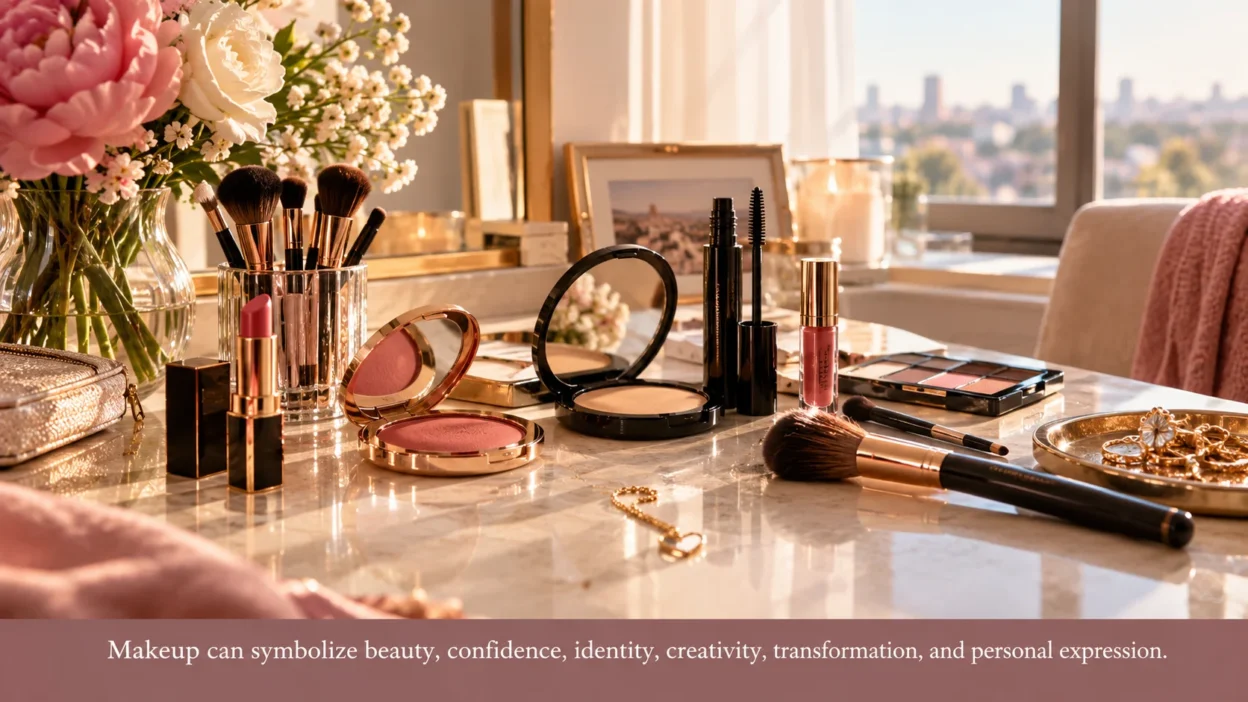
Makeup symbolism reflects the many meanings people attach to cosmetics, beauty rituals, and personal appearance. Makeup can represent beauty and confidence, but it can also express identity, creativity, culture, status, or transformation.
In the modern world , makeup has become part of everyday life and popular culture. Some people wear it for special occasions, while others use it as an artistic or personal form of expression.
However, makeup has never meant only one thing. Its meaning has changed across history, cultures, generations, and social settings. Today, a lipstick color or carefully shaped eye can communicate a mood without saying a word.
Quick Answer
Makeup symbolism in the USA commonly represents beauty, confidence, identity, creativity, transformation, and self-expression. More broadly, cosmetics can also symbolize social status, cultural belonging, personal ritual, and the desire to present oneself in a certain way.
TL;DR
- Makeup often symbolizes beauty, confidence, creativity, and personal identity.
- Ancient cosmetics served beauty, ritual, protection, and social purposes.
- American culture connects makeup with fashion, media, work, and self-expression.
- Colors and application styles can communicate different moods and identities.
- Modern makeup culture increasingly emphasizes individuality and creative freedom.
- Meanings can change depending on context, culture, age, and personal choice.
What Does Makeup Symbolize?
Makeup is more than a collection of cosmetic products. It can become a visual language that communicates how someone wants to appear or feel.
For American readers, this symbolism often depends on context. A person wearing dramatic makeup at a concert may communicate something different from someone wearing subtle makeup at work.
Beauty and Attraction
Beauty is one of makeup’s oldest and most familiar associations. Lip color, blush, eyeliner, and foundation can emphasize features that someone considers attractive.
However, beauty standards change. What looks fashionable in one decade may seem unusual in another.
Identity and Expression
Makeup also allows people to explore identity. A particular style can become part of someone’s recognizable appearance.
For example, bold eyeliner, colorful eyeshadow, or unusual lipstick can communicate creativity and individuality.
Historical Origins of Makeup
The history of cosmetics reaches far beyond modern beauty stores. Ancient societies used natural pigments, oils, minerals, and plant materials for several purposes.
However, people didn’t always separate beauty from ritual, health, status, or social identity. Cosmetics could serve several roles at the same time.
Ancient Roots
Ancient Egyptians famously used eye cosmetics made with mineral-based pigments. Dark eye designs had practical, decorative, and cultural associations.
In other ancient societies, people also used colored powders, oils, perfumes, and plant-based materials. These practices show that altering appearance has a very long human history.
Cosmetics Through History
Over time, makeup became connected with changing ideas about class and respectability. In some periods, visible cosmetics were associated with wealth or performers.
Meanwhile, certain religious and social traditions encouraged simplicity or discouraged excessive decoration. Therefore, makeup symbolism has never been completely universal.
Makeup Symbolism in American Culture
American makeup culture has been shaped by Hollywood, advertising, fashion, music, television, and social media. As a result, cosmetics became both personal products and cultural symbols.
Today, makeup can signal professionalism, glamour, creativity, rebellion, celebration, or simply routine. The same product can carry different meanings for different people.
Beauty and American Media
Film and television helped popularize recognizable makeup styles. Hollywood glamour, for example, helped connect polished makeup with celebrity culture.
Later, music videos and fashion magazines expanded the range of visible beauty styles. Social media has now made those styles easier for ordinary users to recreate.
Everyday American Life
Makeup appears in many ordinary settings:
• Workplace routines can connect makeup with polish and presentation.
• Weddings often use makeup to emphasize celebration and photography.
• Parties may encourage brighter or more dramatic cosmetic styles.
• Performers use makeup to strengthen visual characters and stage presence.
• Online creators often use makeup as part of personal branding.
Makeup Colors and Their Meanings
Color strongly affects makeup symbolism. However, these meanings aren’t fixed rules.
In American culture, color associations often come from fashion, entertainment, advertising, seasonal traditions, and personal experience. A person’s chosen color can also carry private meaning.
| Makeup Color | Common American Association | Emotional Suggestion | Context |
| Red | Passion, glamour, confidence | Boldness and energy | Lipstick, special occasions |
| Pink | Softness, youth, romance | Warmth and playfulness | Blush, lips, eyes |
| Black | Drama, mystery, strength | Intensity and sophistication | Eyeliner, shadow |
| Nude | Natural beauty, simplicity | Calm and restraint | Everyday makeup |
| Purple | Creativity, individuality | Imagination and mystery | Eyeshadow, lips |
| Gold | Luxury, celebration, glamour | Warmth and confidence | Eyes and highlights |
Red Makeup
Red lipstick is one of the strongest examples of color symbolism. It can suggest confidence, romance, glamour, power, or attention.
However, its meaning depends heavily on styling and setting. A red lip may feel classic in one context and dramatic in another.
Black Makeup
Black often creates a stronger or more mysterious visual effect. Eyeliner and dark eyeshadow can communicate intensity, elegance, rebellion, or artistic expression.
Meanwhile, black makeup can also be connected with specific music and fashion subcultures.
Makeup and Feminine Symbolism
Makeup has historically been strongly associated with femininity in American culture. This connection developed through changing beauty standards, advertising, fashion, and social expectations.
However, modern makeup culture is broader than traditional gender expectations. Many people now use cosmetics without treating them as exclusively feminine.
Beauty Standards
Makeup can help people meet beauty standards promoted by their surroundings. At the same time, it can help people challenge those standards.
For example, someone might use makeup to create a highly polished appearance. Another person might use bright colors to reject conventional ideas about natural beauty.
Confidence and Presentation
Many people describe makeup as helping them feel prepared or confident. This doesn’t mean makeup creates confidence for everyone.
Instead, cosmetics can become part of a personal preparation ritual. The ritual itself may create a sense of control before an important day.
Emotional and Psychological Meaning of Makeup
Makeup can influence how people feel about their appearance. It can also become connected with memory, routine, creativity, and emotional expression.
For American consumers, makeup may be associated with both private rituals and public presentation. Getting ready can become a small daily moment of personal attention.
Transformation
Makeup often symbolizes transformation because it can noticeably change someone’s appearance.
However, transformation doesn’t necessarily mean hiding one’s identity. Many people use cosmetics to highlight features they already enjoy.
Confidence and Control
Applying makeup can create a feeling of preparation. Choosing colors, shaping eyebrows, or applying lipstick can provide a predictable routine.
For some people, that routine feels calming. For others, experimenting with makeup provides creative excitement.
Self-Expression
Makeup can function much like clothing or jewelry. It allows people to communicate a chosen mood visually.
A person may choose soft colors when they want simplicity. Another day, the same person may choose dramatic colors to express energy or creativity.
Makeup as a Symbol of Transformation
Transformation is one of makeup’s most powerful modern meanings. A face can look completely different after changing color, texture, shape, and emphasis.
This symbolism appears especially strongly in entertainment and online beauty culture.
Before-and-After Culture
Before-and-after makeup images show visible transformation. They can highlight technique, creativity, or dramatic visual change.
However, these images don’t always represent everyday experiences. Lighting, camera angles, editing, and professional techniques can affect the result.
Costume and Performance
Makeup also transforms performers into characters. Theater, dance, film, drag performance, and cosplay all use cosmetics to create visual identities.
In these settings, makeup becomes part of storytelling rather than simply beauty.
Makeup Symbolism in Fashion and Pop Culture
Fashion has repeatedly changed what makeup means. Popular musicians, actors, models, and online creators have introduced styles that later became widely recognized.
As a result, makeup can symbolize belonging to a particular moment or cultural scene.
Music and Subcultures
Different music scenes have developed recognizable cosmetic styles. Punk, goth, rock, pop, and other communities have used makeup to create distinctive visual identities.
These styles can communicate creativity, resistance, belonging, or artistic independence.
Social Media
Social platforms have made makeup tutorials and transformations part of everyday digital culture. People can learn techniques from creators across the world.
At the same time, online beauty trends can change extremely quickly. A style that feels distinctive today may become common within months.
Makeup in Weddings, Holidays, and Special Events
Makeup often becomes more symbolic during important life events. Weddings, graduations, birthdays, performances, and celebrations can encourage people to create a carefully planned appearance.
In the USA, these moments often connect makeup with memory and photography.
Weddings
Wedding makeup commonly symbolizes celebration, preparation, beauty, and confidence. Many people choose styles designed to feel timeless rather than highly experimental.
However, modern weddings increasingly allow personal styles. Some people choose bold colors, while others prefer a natural appearance.
Holidays and Celebrations
Holiday makeup can communicate playfulness and seasonal identity. Glitter, metallic colors, dramatic eyeliner, and themed designs are common examples.
Halloween provides an especially strong example because makeup can completely transform a person’s appearance.
Spiritual and Cross-Cultural Meanings of Makeup
Cosmetics have carried cultural and spiritual meanings in many societies. These traditions differ greatly, so no single interpretation applies everywhere.
Ancient cosmetics could be connected with ritual, protection, beauty, social position, or ceremonial identity. Modern readers should avoid treating all traditional makeup practices as interchangeable.
Ritual and Ceremony
In some cultures, face decoration has appeared during ceremonies and important transitions. Such markings may communicate belonging, status, celebration, or spiritual meaning.
These practices can be very different from everyday commercial cosmetics.
Beauty and Protection
Some historical cosmetic practices combined appearance with protective or practical purposes. Natural pigments and oils could have roles beyond decoration.
Therefore, the modern idea of makeup as purely cosmetic doesn’t capture the full history.
Makeup and Social Status
Throughout history, appearance has sometimes communicated wealth or social position. Expensive ingredients, elaborate styles, and access to skilled beauty services could distinguish social groups.
Modern American culture has changed this relationship but hasn’t removed it completely.
Luxury and Glamour
High-end cosmetics can symbolize luxury, sophistication, or personal achievement. Packaging and presentation can strengthen those associations.
However, expensive products aren’t automatically more meaningful. Personal preference often matters more than price.
Professional Appearance
Makeup can also become connected with ideas about professionalism. Some workplaces and industries have stronger appearance expectations than others.
These expectations continue to change as American workplaces become more diverse in appearance and personal style.
Makeup, Identity, and Personal Freedom
Modern makeup culture increasingly treats cosmetics as a personal choice. People can use makeup to emphasize identity, experiment with appearance, or simply enjoy a daily ritual.
However, personal freedom can exist alongside social pressure. Someone may enjoy makeup while also feeling expected to wear it.
Individual Identity
Makeup can become part of someone’s signature appearance. A particular lipstick, eyeliner shape, or color palette may become immediately recognizable.
Because of this, cosmetics can function as a visual extension of personality.
Breaking Expectations
Some people use makeup specifically to challenge traditional beauty rules. Unusual colors, exaggerated shapes, and unconventional designs can question what makeup is supposed to look like.
This makes makeup a tool for creative experimentation as much as conventional beauty.
Makeup Symbolism in Tattoos and Art
Although makeup itself isn’t a tattoo, cosmetic imagery appears frequently in tattoo art. Lipstick, mirrors, compact cases, brushes, and painted faces can all carry symbolic meanings.
For tattoo designs, context matters greatly.
Common Tattoo Meanings
A lipstick tattoo may represent glamour, confidence, romance, or personal style. A mirror can add themes of identity, self-reflection, or appearance.
Meanwhile, an artistic painted face can symbolize transformation or the difference between public and private identity.
Artistic Expression
Artists can combine makeup imagery with flowers, jewelry, eyes, hearts, or mirrors. These combinations create more specific personal stories.
Therefore, the meaning of a makeup-inspired tattoo usually comes from the complete design rather than one object.
Misunderstandings and Controversies
Makeup symbolism can become complicated when personal choice meets social expectations. Beauty practices have sometimes been criticized as artificial, deceptive, excessive, or necessary.
These views reflect different cultural ideas about appearance rather than one universal truth.
The Idea of “Natural” Beauty
One common misunderstanding is that makeup automatically means someone is being fake. In reality, many people use cosmetics simply because they enjoy them.
Similarly, choosing not to wear makeup doesn’t necessarily communicate rejection of beauty or fashion.
Beauty Pressure
Another concern involves pressure to maintain certain appearances. Advertising and social media can create narrow ideas about what attractive skin, eyes, lips, or facial features should look like.
However, beauty standards are not fixed. They change across generations and communities.
Cultural Context
Some makeup styles have roots in specific cultural traditions. Problems can arise when a meaningful practice is copied without understanding its history.
Context matters, especially when traditional symbols are removed from their original cultural setting.
Read More: Hair Symbolism: Meaning, History, and Modern Uses
How Makeup Symbolism Has Changed Over Time
Makeup symbolism has moved through many stages. It has represented ritual, beauty, status, respectability, glamour, rebellion, performance, and individual expression.
Today, these meanings often exist together rather than replacing one another.
From Social Rules to Personal Choice
Earlier beauty traditions could involve strict expectations about who should wear cosmetics and how. Modern American culture generally offers more visible choices.
However, social pressure still exists in some settings. The difference is that people now have more ways to challenge traditional expectations.
From Glamour to Creativity
Makeup was once strongly associated with polished beauty and celebrity glamour. Today, creative experimentation is equally visible.
Social media has helped normalize unusual colors, artistic designs, gender-neutral makeup, and highly individual styles.
FAQs
What does makeup symbolize spiritually?
Makeup can symbolize transformation, ritual, identity, beauty, or preparation in different spiritual and cultural settings. However, its meaning depends on the specific tradition rather than one universal belief.
What does lipstick symbolize?
Lipstick can symbolize confidence, beauty, romance, glamour, individuality, or bold self-expression. Color and setting can change its meaning significantly.
What does wearing makeup say about a person?
Makeup alone doesn’t reveal someone’s personality or values. It may simply reflect personal taste, routine, creativity, cultural expectations, or enjoyment.
Why is makeup associated with femininity?
Makeup became strongly connected with femininity through historical beauty standards, fashion, advertising, and social expectations. Modern cosmetic culture is broader and includes many different identities and styles.
Does makeup symbolize confidence?
It can. Many people associate makeup with feeling prepared, polished, expressive, or confident, although not everyone experiences it in the same way.
What does a makeup tattoo symbolize?
A makeup-related tattoo can symbolize beauty, confidence, transformation, creativity, identity, or personal style. The surrounding tattoo imagery often adds more specific meaning.
Conclusion
Makeup has carried many meanings across human history, from beauty and ceremony to status and personal identity. In the United States today, it can symbolize confidence, creativity, transformation, individuality, and self-expression. At the same time, makeup doesn’t have one fixed meaning. Makeup symbolism changes with color, setting, culture, personal experience, and social expectations. Whether someone wears a simple lip color or creates an elaborate artistic look, cosmetics can become part of a personal visual language. The most meaningful interpretation often comes from understanding what that choice means to the person wearing it.