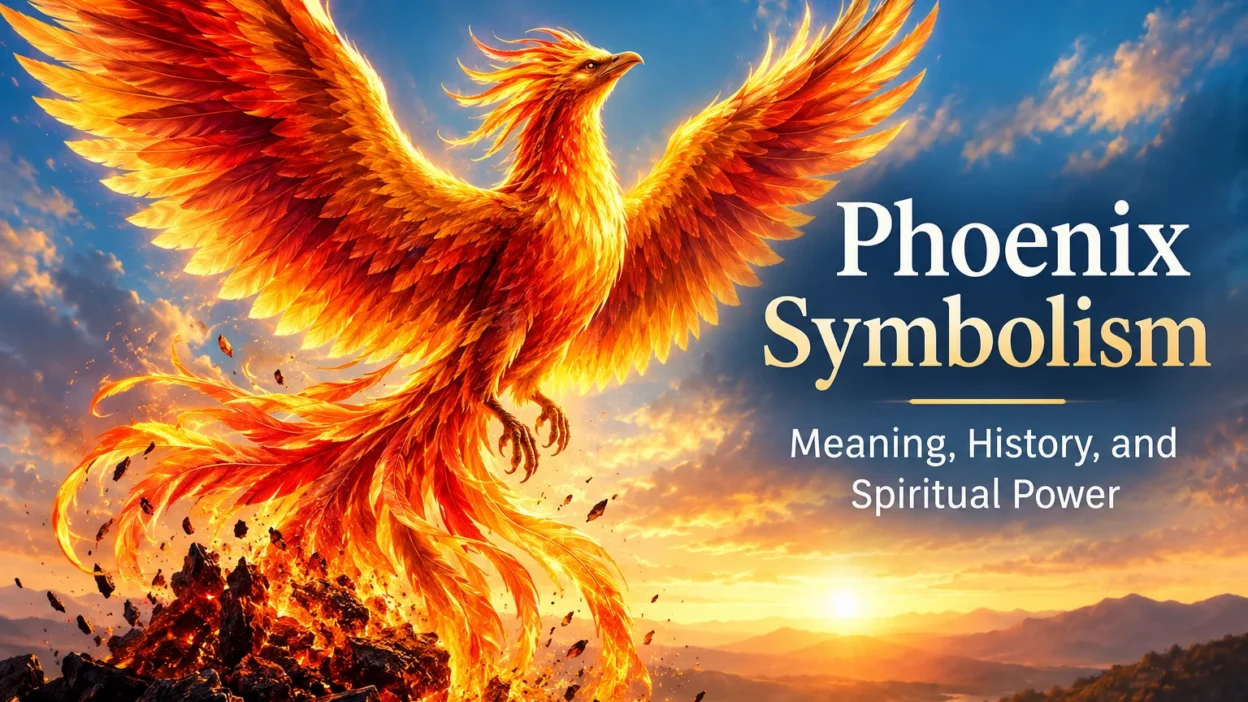
Phoenix symbolism centers on the idea of rising again after destruction. The phoenix is a mythical bird that burns or dies before emerging renewed from its own ashes. Its powerful image represents the ability to overcome hardship, begin again, and find hope after difficult experiences.
However, the phoenix carries meanings beyond personal resilience. Its story reaches back thousands of years, connecting ancient beliefs about the sun, fire, life, and death. Over time, different cultures and traditions adapted the bird to express their own ideas about renewal and the continuing cycle of existence.
Today, the phoenix remains a striking symbol because its message feels familiar. Life can bring unexpected endings, but an ending doesn’t always mean everything is lost. Sometimes, it marks the beginning of something new.
Quick Answer
Phoenix symbolism in the United States primarily represents rebirth, resilience, hope, and the strength to begin again after hardship. More broadly, the phoenix symbolizes transformation, renewal, immortality, and the enduring connection between endings and new beginnings.
TL;DR
- The phoenix represents rebirth, renewal, resilience, and hope after hardship.
- Ancient stories connected the bird with fire, the sun, and immortality.
- In America, it often symbolizes recovery, personal growth, and second chances.
- Phoenix tattoos can express survival, transformation, independence, and inner strength.
- Spiritual interpretations connect the bird with renewal and life’s continuing cycles.
- Its meaning depends on personal experience, cultural background, and visual context.
What Is the Phoenix Symbol?
The phoenix is a legendary bird famous for its extraordinary cycle of death and renewal. Unlike an ordinary bird, it represents the possibility of emerging from destruction with renewed life and purpose.
Its appearance makes this message especially powerful. Artists often depict the phoenix with sweeping wings, elaborate tail feathers, glowing flames, and a dramatic upward flight.
Common Phoenix Colors and Features
Although its design varies, certain visual details appear frequently in American art and popular culture.
- Red and orange: Suggest fire, passion, energy, and powerful change.
- Gold and yellow: Represent sunlight, vitality, achievement, and hope.
- Black and gray: Emphasize destruction, grief, mystery, or the end of an old chapter.
- Outstretched wings: Suggest freedom, courage, expansion, and rising above adversity.
- Flames and ashes: Represent the difficult ending that makes renewal possible.
Not every phoenix includes flames. Some designs show a brilliant bird rising into the sky, while others emphasize a quiet moment of recovery.
What Makes the Phoenix Different From Other Mythical Birds?
The phoenix is especially associated with its own death and return. Its story focuses less on ordinary flight and more on the relationship between endings and beginnings.
Other mythical birds may represent wisdom, divine power, or protection. The phoenix stands apart because its defining story centers on renewal after destruction.
Historical Origins of Phoenix Symbolism
The phoenix’s history stretches across ancient Mediterranean and Near Eastern traditions. Its meaning changed as writers, religious thinkers, and artists adapted the bird to explain the mysteries of life, death, and renewal.
Ancient Egyptian Connections
Ancient Egypt had a sacred bird called the Bennu, often associated with creation, the sun, and renewal. It appeared in religious traditions connected with the sun god Ra and the creator deity Atum.
The Bennu was commonly represented as a heron-like bird. Although scholars often discuss it alongside the later phoenix, the two should not be treated as perfectly identical symbols.
Both, however, express ideas about renewed life and the return of creative power. These connections helped establish a background for later stories about extraordinary birds linked to the sun and the cycle of existence.
Greek and Roman Traditions
The phoenix became more recognizable in ancient Greek and Roman literature. Greek writers described a rare bird associated with distant lands, extraordinary longevity, and renewal.
Later accounts developed the familiar story of a bird that dies and returns through fire or ashes. Roman writers also used the phoenix to express the idea of continuity beyond an apparent ending.
These accounts weren’t identical. Some described a new bird emerging from the remains of its predecessor, while other versions emphasized the bird’s remarkable lifespan and return.
From Ancient Myth to Religious Imagery
As the story spread, the phoenix gained new interpretations. Early Christian writers sometimes used it as an example of resurrection and the possibility of life after death.
The bird also appeared in later European art, literature, and heraldic imagery. Its connection with renewal made it useful wherever people wanted to express endurance, hope, or life continuing beyond destruction.
Phoenix Symbolism in the United States
In American culture, the phoenix is widely understood as a symbol of personal renewal and the determination to recover from hardship. Its meaning fits familiar stories of overcoming obstacles, starting over, and building a better future.
The American Idea of a Second Chance
American culture often celebrates perseverance and the ability to rebuild after failure. The phoenix gives that familiar idea a dramatic visual form.
Someone who changes careers, recovers from a personal setback, or starts a new life after a difficult period may identify with the bird. Its message isn’t that hardship is easy, but that hardship doesn’t have to define the rest of a person’s life.
The phoenix also fits stories of communities rebuilding after fires, disasters, and other major disruptions. In these settings, it can represent shared determination and the hope of restoring what was lost.
Phoenix Imagery in American Cities and Popular Culture
The city of Phoenix, Arizona, offers a familiar American connection to the bird’s symbolism. The city was named Phoenix partly to express the idea of a new settlement rising from the remains of an earlier civilization in the area.
That connection gives the name a sense of renewal, although the city’s actual history is more complex than the myth alone suggests. The name also became an enduring part of the city’s identity.
In American entertainment, the phoenix frequently appears in fantasy, superhero stories, games, and fictional worlds. These portrayals reinforce its associations with extraordinary power, transformation, and return after apparent defeat.
Common American Interpretations
The phoenix may communicate different ideas depending on where it appears.
- Personal artwork can celebrate survival after a painful experience.
- Community memorials may express recovery and collective hope.
- Creative projects can use it to represent reinvention.
- Fictional heroes may embody the ability to return after defeat.
- Business imagery can suggest a fresh start or renewed ambition.
These meanings share a central theme: destruction doesn’t always have the final word.
Spiritual Meaning of the Phoenix
Spiritually, the phoenix often represents renewal, transformation, and the possibility of discovering meaning after loss. However, it doesn’t belong exclusively to one religion, and its spiritual interpretation depends on the tradition and individual.
Rebirth and Inner Transformation
Some people interpret the phoenix as a symbol of inner change. The fire represents a challenging experience, while the renewed bird represents a changed perspective or a stronger sense of purpose.
This interpretation doesn’t require a literal belief in rebirth. Instead, the story can describe a personal transformation in which someone leaves an old identity behind and develops a new one.
For example, a person might associate the phoenix with learning to set boundaries, rebuilding confidence, or finding direction after a major life change.
Hope, Renewal, and Faith
In some Christian interpretations, the phoenix has represented resurrection and eternal life. Its return from apparent destruction offered a visual comparison for the belief that death doesn’t necessarily mark the end of existence.
Outside Christianity, people may use the bird in a broader spiritual sense. It can symbolize hope, the renewal of purpose, or the feeling that life contains possibilities beyond a painful ending.
However, the phoenix isn’t a universal religious symbol. Its meaning should be understood within the specific beliefs and traditions in which it appears.
Phoenix Symbolism Across Different Cultures
The phoenix story is often discussed alongside other legendary birds associated with renewal and extraordinary power. Comparing these traditions can reveal shared themes, but their differences matter just as much.
The Egyptian Bennu
The ancient Egyptian Bennu was associated with creation, the sun, and cycles of renewal. Its religious role developed within Egyptian ideas about the origins and continuation of life.
Although the Bennu is frequently linked to the phoenix, it has its own identity and historical context. Understanding that distinction helps prevent different traditions from being reduced to one generalized myth.
The Chinese Fenghuang
The Chinese fenghuang is sometimes called the Chinese phoenix in English. However, it isn’t simply another version of the Western bird that burns and rises from ashes.
The fenghuang has associations with harmony, virtue, prosperity, and auspicious order. It may appear in traditional art, ceremonial imagery, and decorative designs.
Its meaning is shaped by Chinese cultural history rather than the Western phoenix’s central story of death through fire.
The Persian Simurgh
The Persian Simurgh is another legendary bird, known for its wisdom, healing associations, and role in Persian literature. It can symbolize knowledge, protection, and a connection between different levels of existence.
Unlike the familiar Western phoenix, the Simurgh isn’t defined primarily by burning and returning from ashes. Its inclusion in comparisons is useful because it shows how birds can represent renewal or extraordinary power in different ways.
Shared Themes and Important Differences
Across cultures, legendary birds can express ideas that ordinary animals cannot easily communicate. They may represent the sun, wisdom, divine order, protection, or life beyond familiar limits.
Still, similar images don’t prove that every tradition shares the same origin. Each bird has its own history, and respectful comparisons preserve those differences.
Emotional and Psychological Meaning of the Phoenix
The phoenix can have strong emotional meaning because its story turns a frightening experience into a possibility for renewal. It acknowledges destruction without treating destruction as the end of every future opportunity.
Resilience After Hardship
For many people, the phoenix represents resilience: the ability to adapt, recover, and continue after difficulty. It can be especially meaningful after grief, disappointment, personal failure, or a major life transition.
The bird doesn’t suggest that painful experiences should be welcomed. Instead, it offers a reminder that recovery can happen even when the future initially feels uncertain.
Letting Go of an Old Identity
The fire in phoenix imagery can symbolize leaving an old version of yourself behind. Someone might use the symbol to mark a change in priorities, relationships, habits, or personal goals.
However, transformation doesn’t require rejecting everything about the past. The phoenix can also represent carrying valuable lessons forward while choosing a different direction.
Confidence and Personal Strength
Phoenix imagery often communicates independence and determination. Its rising posture suggests movement, possibility, and the courage to act after a setback.
For some people, the symbol serves as a personal reminder rather than a public message. A small pendant, sketch, or tattoo can hold meaning without requiring an explanation to others.
Phoenix Tattoo Meaning
Phoenix tattoos are popular among people who want body art to express renewal, courage, and personal transformation. The design can be dramatic or understated, depending on the story the wearer wants to communicate.
Popular Phoenix Tattoo Designs
- Rising phoenix: Represents recovery, progress, and a new beginning.
- Phoenix in flames: Emphasizes transformation through a difficult period.
- Phoenix with open wings: Suggests freedom, confidence, and personal independence.
- Black phoenix: May express survival, mystery, grief, or strength through hardship.
- Red and gold phoenix: Highlights energy, vitality, passion, and renewed hope.
- Minimalist phoenix: Offers a quieter symbol of change or personal growth.
Where the Tattoo Appears
Placement can affect how a phoenix tattoo looks and how its wearer experiences it. A large back or chest design allows room for detailed feathers and sweeping wings.
Smaller designs may appear on the forearm, shoulder, ankle, or wrist. Some people choose a visible placement as a public statement, while others prefer a more private reminder.
What a Phoenix Tattoo Says About Identity
A phoenix tattoo may mark an important turning point. For one person, it could represent recovering from a painful relationship; for another, it might celebrate a fresh start after years of uncertainty.
However, the design doesn’t reveal someone’s full story. The same image can hold very different meanings for different people, so it’s best not to assume what a tattoo represents.
Phoenix Symbolism in Dreams
Dreaming about a phoenix may feel memorable because the bird combines fire, destruction, and renewed life. People often interpret such dreams through their current emotions and personal circumstances.
Seeing a Phoenix Rise From Ashes
A rising phoenix may represent hope, recovery, or a desire to move beyond a difficult experience. If you’re facing a major transition, the image might reflect your thoughts about starting again.
However, dreams don’t have one fixed meaning. A phoenix could also come from a recent movie, book, game, or image you encountered.
A Phoenix Surrounded by Fire
Fire may suggest intense emotion, change, fear, or energy, depending on the dream’s context. A phoenix surrounded by flames might feel inspiring to one person and threatening to another.
Your emotional reaction matters more than a universal dream dictionary. Consider what the fire and the bird remind you of in your own life.
A Phoenix Flying Into the Sky
A flying phoenix can suggest freedom, ambition, or movement toward a new goal. It may also reflect a wish to leave a stressful situation behind.
Rather than treating the dream as a prediction, use it as an opportunity to reflect on your feelings. Ask what kind of change, if any, feels important to you right now.
Phoenix Symbolism in Art, Fashion, and Home Decor
The phoenix has a recognizable shape and a dramatic story, making it useful across many forms of modern design. In the United States, it appears in personal accessories, decorative art, clothing, illustrations, and fictional settings.
Art and Decorative Objects
Phoenix artwork can bring themes of hope and transformation into a living space. Some designs feature fiery feathers and bright colors, while others use simple outlines or muted shades.
The style changes the mood. A gold phoenix may feel celebratory, while a dark, abstract version may emphasize mystery and survival.
Fashion and Personal Accessories
The bird appears on pendants, rings, clothing, patches, and other accessories. Wearing a phoenix can communicate a personal value or simply reflect an appreciation for mythical creatures.
For some people, the design represents a life change they don’t want to forget. For others, it’s primarily an artistic choice.
Social Media and Digital Culture
Online, phoenix images often accompany messages about recovery, motivation, and personal growth. People may use the bird to mark a new chapter or express determination after a setback.
Its meaning can become simplified in short posts. Even so, the symbol remains flexible enough to communicate both personal experiences and broader ideas about change.
Phoenix Symbolism in Literature, Movies, and Games
Stories and entertainment have helped keep the phoenix familiar to American audiences. Its dramatic return after apparent destruction makes it a natural symbol for characters who face overwhelming challenges.
The Phoenix as a Storytelling Device
Writers can use the bird to suggest that a character’s journey isn’t over. A phoenix might appear when a hero must recover from defeat, confront an old identity, or discover a new source of strength.
Sometimes the bird appears literally as a magical creature. In other stories, its meaning is expressed through fire, feathers, or a character’s return.
Why Audiences Connect With the Phoenix
The phoenix offers a satisfying story structure: loss creates uncertainty, change follows, and something new emerges. That pattern mirrors experiences people recognize in everyday life.
However, the symbolism is more powerful when the character’s transformation has meaning. Simply returning from defeat isn’t the same as learning from it, and phoenix imagery can suggest both survival and growth.
Positive and Negative Interpretations of the Phoenix
The phoenix is usually associated with hopeful ideas, but its symbolism isn’t entirely simple. Fire can represent destruction as well as renewal, and the bird’s meaning depends on the surrounding story or image.
Positive Meanings
In most contemporary American contexts, the phoenix suggests the possibility of rebuilding after difficulty.
- Hope when the future feels uncertain.
- Courage to begin again after failure.
- Resilience during major personal changes.
- Freedom from an identity that no longer fits.
- Renewal after loss, disruption, or disappointment.
More Difficult Interpretations
The same image can also communicate pain, destruction, or the cost of transformation. A phoenix rising from ashes acknowledges that something may have ended before renewal became possible.
The symbol can feel uncomfortable when people use it to romanticize suffering. Recovery doesn’t make hardship necessary, and no one needs to experience trauma to become stronger.
Cultural Confusion and Misuse
One common mistake is treating every legendary bird as the same creature. The Western phoenix, Egyptian Bennu, Chinese fenghuang, and Persian Simurgh have distinct histories and meanings.
Another mistake is assuming that every phoenix design expresses a profound personal journey. Sometimes it’s simply decorative, fictional, or chosen because the artwork looks beautiful.
Phoenix Symbolism Over Time
Phoenix symbolism has changed as people have adapted the bird to different historical and cultural settings. Its enduring appeal comes from its ability to express renewal without requiring one fixed interpretation.
From Ancient Renewal to Resurrection
In ancient traditions, birds associated with the sun and creation could represent the continuation of life. Greek and Roman accounts developed the phoenix as an extraordinary creature linked to longevity and return.
Later Christian interpretations sometimes connected the bird with resurrection. This gave the phoenix a more explicit religious meaning in some European settings.
Read More: Karma Symbolism: Meaning, Origins, and Spiritual Lessons
From Religious Symbol to Personal Emblem
Over time, the phoenix appeared in literature, art, decorative design, and stories about national or personal renewal. Its meaning gradually expanded beyond religious contexts.
In modern American culture, the bird often represents an individual’s ability to move forward after hardship. This personal interpretation works alongside its older associations with immortality and renewal.
What Has Stayed the Same?
Despite these changes, the phoenix continues to connect endings with possibilities for new life. The details vary, but the central idea remains recognizable.
| Context | Common Meaning | Typical Associations | Important Note |
| Ancient traditions | Renewal and the return of life | Sun, creation, longevity | Different birds had distinct identities |
| Christian interpretations | Resurrection and continued life | Faith, hope, eternal life | Not a universal Christian symbol |
| American personal symbolism | Recovery and transformation | Second chances, resilience | Meaning depends on personal experience |
| Tattoos and fashion | Identity and renewal | Courage, independence, change | Not every design has a personal story |
| Fiction and entertainment | Return after defeat | Power, magic, transformation | The story shapes the interpretation |
FAQs
What Does a Phoenix Symbolize Spiritually?
A phoenix often represents renewal, hope, transformation, and the possibility of beginning again. Some spiritual interpretations connect it with resurrection or the continuing cycle of life, although meanings differ between traditions.
Is the Phoenix a Symbol of Rebirth?
Yes, rebirth is one of its most widely recognized meanings. The bird’s legendary return after death or destruction makes it a powerful image of new beginnings and renewed purpose.
What Does a Phoenix Tattoo Mean?
A phoenix tattoo commonly expresses resilience, personal growth, survival, or freedom from the past. However, its meaning depends on the wearer and may reflect a particular life event or simply an artistic preference.
Is the Phoenix a Good Luck Symbol?
Some people associate the phoenix with favorable change, opportunity, and renewed hope. However, it isn’t universally considered a traditional good luck symbol, and its primary meaning is usually transformation rather than luck alone.
What Does a Phoenix Rising From Ashes Mean?
A phoenix rising from ashes represents the possibility of rebuilding after destruction or loss. It suggests that a painful ending can become the starting point for a different future.
What Is the Difference Between the Phoenix and the Chinese Fenghuang?
The Western phoenix is especially associated with death, fire, and rebirth. The Chinese fenghuang has different cultural roots and is associated with harmony, virtue, prosperity, and auspicious order.
Conclusion
Phoenix symbolism represents rebirth, resilience, hope, and the courage to begin again. From ancient stories about extraordinary birds to modern American tattoos and artwork, the phoenix has remained a powerful image of renewal after hardship. Its meaning is personal as well as historical. Some people see it as a reminder of survival, while others connect it with spiritual renewal, creative change, or the freedom to build a new identity. Ultimately, the phoenix reminds us that an ending doesn’t have to define everything that follows. Whether you encounter it in mythology, art, or your own life, consider what new beginning its image might represent for you.