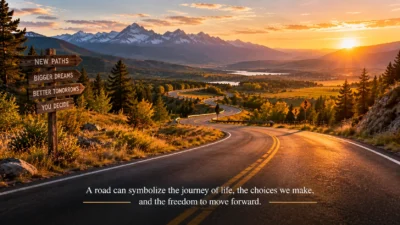
Travel Symbolism appears whenever movement from one place to another carries a meaning beyond transportation. A road, suitcase, passport, compass, map, airplane, or distant horizon can all suggest a deeper journey.
In the modern world, travel often represents freedom, independence, adventure, and the chance to begin again. Road trips, family vacations, immigration stories, outdoor exploration, and journeys across the country have all shaped these ideas.
However, travel can also symbolize uncertainty. Leaving familiar surroundings means entering a space where outcomes aren’t always known. Because of that, travel often becomes a powerful image for personal change.
Quick Answer
Travel Symbolism in the USA commonly represents freedom, adventure, discovery, personal growth, and change. More broadly, travel can symbolize a journey through life, movement between stages, spiritual searching, or the search for something unknown.
TL;DR
- Travel commonly symbolizes freedom, adventure, discovery, and personal growth.
- Roads and journeys often represent life’s changing direction.
- American culture strongly connects travel with independence and exploration.
- Ancient travelers associated journeys with trade, pilgrimage, exile, and discovery.
- Modern travel imagery appears in tattoos, fashion, decor, and social media.
- The meaning changes depending on destination, purpose, and personal experience.
What Does Travel Symbolize?
Travel is more than physical movement when people use it as a symbol. Instead, the journey becomes a picture of change, choice, discovery, or transformation.
For American readers, this idea feels familiar because travel is deeply connected with road culture, migration, vacations, exploration, and personal independence.
The Core Meanings
Travel can carry several related meanings:
• Freedom from familiar limits and routines
• Adventure and willingness to experience something new
• Personal growth through unfamiliar experiences
• Discovery of places, cultures, and parts of yourself
• Change from one stage of life into another
• Independence and the ability to choose your direction
The same journey can represent different things to different people. A family vacation may symbolize connection, while a solo trip may represent independence.
Historical Meaning of Travel
Travel has carried symbolic meaning for thousands of years. Long before modern airports and highways, people traveled for trade, migration, pilgrimage, conquest, education, survival, and exploration.
Ancient stories often used journeys as a way to show transformation. A person left home, faced challenges, encountered unfamiliar places, and returned changed.
Ancient Journey Traditions
In the ancient world, travel could have practical and sacred purposes.
• Merchants traveled between distant communities for trade and exchange
• Pilgrims traveled toward places considered spiritually important
• Explorers crossed unfamiliar regions seeking knowledge and resources
• Migrating communities searched for safer or more productive lands
• Exiles experienced travel as separation from home and identity
As a result, the journey became a natural metaphor for human experience.
The Journey as Transformation
Many traditional stories follow a simple pattern: departure, challenge, discovery, and return.
This pattern still appears in modern movies and books. The traveler often begins with one understanding of life and returns with another.
Travel Symbolism in the USA
American culture gives travel a particularly strong connection with freedom and independence. The country’s large geography also makes long-distance movement a familiar part of everyday life.
From interstate highways to cross-country road trips, Americans often associate travel with choosing their own direction.
The American Road
The road is one of America’s strongest travel images. It can represent possibility because it always seems to lead somewhere beyond the current location.
Road trips also connect travel with memories. Families may remember specific highways, national parks, roadside towns, or destinations from childhood.
Exploration and the Open Landscape
American landscapes have also shaped travel imagery.
Mountains, deserts, forests, coastlines, and wide highways often appear in photographs and advertising. These settings can suggest freedom, adventure, solitude, and discovery.
However, travel symbolism can also reflect America’s complicated history. Movement across the continent has involved migration, displacement, settlement, commerce, tourism, and encounters between different communities.
The Spiritual Meaning of Travel
Travel can have a spiritual meaning when the physical journey represents an inner search. This doesn’t require one particular religious belief.
Across different traditions, journeys have sometimes represented devotion, purification, learning, testing, or movement toward a sacred destination.
Pilgrimage and Inner Change
A pilgrimage differs from ordinary tourism because the destination carries special spiritual importance.
Yet the journey itself can matter just as much. Walking, waiting, leaving familiar surroundings, and facing difficulties can encourage reflection.
The Inner Journey
Modern people also use travel as a metaphor for personal discovery.
Someone might describe a difficult period as a “journey” toward understanding. In this sense, travel represents emotional movement rather than physical distance.
Travel and Personal Growth
Travel often symbolizes growth because unfamiliar situations require adaptation. A traveler may need to communicate differently, solve unexpected problems, or make decisions independently.
For that reason, travel can represent becoming more confident and flexible.
Leaving the Comfort Zone
Familiar places provide predictable routines. Travel interrupts those routines.
That interruption can feel exciting, stressful, or both. However, it can also create opportunities to learn new habits and perspectives.
Returning as a Different Person
A meaningful trip doesn’t always change the destination. Sometimes it changes the traveler.
After returning home, people may see familiar routines differently. They may also value relationships, independence, or everyday experiences in new ways.
Roads, Maps, and Compasses as Travel Symbols
Travel symbolism often appears through objects. Roads, maps, compasses, luggage, passports, and airplanes each communicate a slightly different idea.
These objects are especially common in American art, tattoos, home decor, and travel photography.
| Symbol | Meaning in the USA | Common Associations | Notes |
| Road | Direction and freedom | Adventure, choice, independence | Often represents life’s path |
| Compass | Guidance | Purpose, exploration, confidence | Can suggest finding your way |
| Map | Possibility and discovery | Planning, curiosity, destinations | Often represents options |
| Suitcase | Departure and transition | Moving, travel, new beginnings | Can also suggest leaving the past |
| Airplane | Distance and opportunity | Speed, exploration, connection | Strongly linked with modern travel |
The Compass
A compass often symbolizes direction rather than travel alone. It can suggest knowing your values while circumstances change.
Because of this, compass tattoos sometimes represent guidance, independence, or staying true to a chosen path.
The Map
Maps represent possibilities. They show that multiple routes can lead toward different destinations.
A map can therefore symbolize choices, curiosity, exploration, and the desire to understand the wider world.
Travel as a Symbol of Freedom
Freedom is one of the strongest meanings attached to travel in modern American culture. The ability to leave one place and choose another can feel like an expression of independence.
This meaning appears especially strongly in road-trip culture.
Independence and Choice
Travel allows people to create distance from familiar expectations. A solo traveler may see the journey as a chance to make decisions without the usual routines.
However, freedom doesn’t always mean traveling alone. Families and friends can also experience travel as shared freedom from everyday schedules.
The Open Road
The open road often suggests unlimited possibility.
A road disappearing toward the horizon creates a visual message: the future remains open, and the traveler hasn’t reached the final destination yet.
Travel, Adventure, and Discovery
Travel symbolism also captures curiosity. People leave familiar places because they want to see, learn, taste, experience, or understand something different.
Adventure doesn’t necessarily mean danger. It can simply mean entering an unfamiliar situation.
What Adventure Represents
• Curiosity about unfamiliar places
• Courage to handle uncertainty
• Excitement about unexpected experiences
• Openness to different cultures and environments
• Desire to create lasting memories
Modern travel photography often emphasizes this side of symbolism. Mountains, beaches, forests, airports, and highways become visual shorthand for adventure.
Emotional and Psychological Meaning
Travel can symbolize an emotional state as much as a physical activity. The meaning often depends on whether the journey feels chosen, necessary, exciting, or forced.
A person traveling toward something may feel hopeful. Someone traveling away from something may associate the same image with escape or separation.
Travel and Identity
Travel can become part of someone’s identity.
People may describe themselves as travelers because exploration reflects their values. Social media has also made travel imagery a common way to communicate curiosity, independence, lifestyle, and personal achievement.
Travel and Uncertainty
Not every travel symbol feels positive.
A dark road, empty airport, lost map, or abandoned suitcase can suggest loneliness, uncertainty, displacement, or fear.
This contrast makes travel symbolism flexible. The same road can represent freedom in one context and uncertainty in another.
Travel in Tattoos and Personal Art
Travel imagery is popular in tattoos because many symbols can represent personal stories without requiring words.
A person might choose a compass after reaching an important life milestone. Someone else may choose a mountain range connected with a memorable trip.
Common Travel Tattoo Ideas
• Compass for guidance and personal direction
• Map for exploration and important destinations
• Airplane for freedom and distant adventures
• Coordinates for a meaningful place
• Mountain for challenge and achievement
• Road for an ongoing life journey
Travel tattoos often become personal rather than universal. Their strongest meaning may come from the story behind them.
Travel in Home Decor and Social Media
Travel symbolism also appears in American homes. Vintage maps, globes, framed landscapes, travel posters, suitcases, and nautical objects can create an atmosphere of exploration.
Today, social media has expanded these visual traditions.
Digital Travel Imagery
Travel photographs often feature roads, airports, beaches, mountains, passports, luggage, and sunsets.
These images can communicate more than location. They may suggest freedom, aspiration, relaxation, achievement, or a desire for change.
However, online travel imagery can also present a highly selective view of travel. A photograph may show the exciting destination without showing delays, costs, loneliness, or difficult experiences.
Travel in Literature, Film, and Popular Culture
Stories have long used journeys to structure personal transformation. American literature and film continue this tradition through road stories, adventure narratives, migration stories, and coming-of-age journeys.
The Road Story
The road story usually focuses on movement rather than one fixed location.
Characters may encounter new people, communities, conflicts, and ideas along the way. Their changing experiences become the real story.
The Journey Home
Interestingly, travel symbolism doesn’t always celebrate leaving.
Returning home can symbolize maturity, reconciliation, belonging, or a new appreciation for familiar places. In many stories, the traveler understands home differently after being away.
Cross-Cultural Meanings of Travel
Travel has different meanings across cultures, although several themes appear repeatedly. Journeys can represent discovery, spiritual devotion, migration, trade, education, or transformation.
These meanings shouldn’t be treated as universal rules. Each culture and tradition has its own history and context.
Shared Themes
Across many societies, journeys can suggest:
• Movement from one stage of life to another
• Search for knowledge or wisdom
• Separation from familiar surroundings
• Encounters with unfamiliar people and places
• Spiritual devotion or pilgrimage
• Return with new understanding
The similarities show why journey symbolism feels so intuitive. Human beings have always had to move through changing circumstances.
Misunderstandings and Controversies
Travel symbolism is generally positive, but its meaning can become complicated. The romantic image of travel may overlook experiences involving displacement, forced migration, inequality, or cultural misunderstanding.
For example, calling every journey an “adventure” can erase the difference between voluntary travel and movement caused by war, poverty, persecution, or other difficult circumstances.
Tourism and Cultural Sensitivity
Travel also brings people into contact with communities and traditions that aren’t their own.
Respectful travel symbolism recognizes that destinations aren’t simply backdrops. They are places where people live, work, worship, and maintain cultural traditions.
Travel and Escapism
Travel can also symbolize escape.
Sometimes that reflects a healthy desire for rest or change. In other contexts, it can represent avoiding difficult responsibilities rather than addressing them.
The surrounding story determines which meaning makes sense.
How Travel Symbolism Has Changed
Travel symbolism has shifted as transportation and communication changed. Ancient journeys could take months or years, while modern airplanes can cross oceans within hours.
Because travel has become more accessible, its symbolic language has expanded.
From Pilgrimage to Vacation
Older journey traditions often centered on trade, survival, migration, conquest, or religion. Modern travel also includes tourism, education, business, family visits, and recreation.
As a result, travel now carries both serious and casual meanings.
From Physical Maps to Digital Navigation
Maps once represented uncertainty and exploration because travelers depended on physical information.
Today, digital navigation provides immediate directions. Even so, the map remains a powerful symbolic object because it still represents choices and possible destinations.
Why Travel Symbolism Still Matters Today
Travel remains powerful because it mirrors something nearly everyone understands: life doesn’t stay still.
People change careers, relationships, homes, communities, beliefs, and goals. Even without boarding an airplane, they experience journeys.
Read More: Path Symbolism: Meaning, History, and Modern Uses
A Symbol of Possibility
Travel imagery can remind people that a current situation isn’t necessarily permanent.
A road suggests movement. A compass suggests direction. A horizon suggests something beyond what can currently be seen.
Together, these images create a simple message: there may be another chapter ahead.
FAQs
What Does Travel Symbolize Spiritually?
Travel can symbolize an inner journey, spiritual searching, transformation, or movement toward a meaningful goal. In some traditions, physical journeys also form part of pilgrimage and religious practice.
What Does a Road Symbolize in Travel?
A road often represents direction, freedom, choice, and life’s journey. Its meaning can change depending on whether the road looks welcoming, difficult, empty, or uncertain.
What Does a Compass Symbolize?
A compass commonly represents guidance, direction, purpose, and staying connected to personal values. In tattoos, it can carry a particularly personal meaning.
Why Is Travel Associated With Freedom?
Travel allows people to leave familiar routines and choose different destinations. In American culture, the open road has especially strong connections with independence and personal choice.
What Does a Suitcase Symbolize?
A suitcase can symbolize departure, transition, independence, or a new beginning. It can also represent leaving something familiar behind.
What Does Travel Symbolize in a Dream?
Travel in a dream is sometimes interpreted as a symbol of change, uncertainty, exploration, or personal transition. However, dream meanings depend heavily on the individual’s experiences and the details of the dream.
Conclusion
Travel Symbolism connects physical movement with deeper ideas about freedom, discovery, independence, change, and personal growth. In the United States, roads, maps, compasses, airplanes, and open landscapes often express these ideas. However, travel can also represent uncertainty, separation, identity, or the search for belonging. Its meaning depends on the journey, the traveler, and the story surrounding it. Whether you see travel as adventure or transformation, the symbol offers a simple reminder: life is often defined not only by where you arrive, but by what you learn along the way.